A mini stroke, or transient ischemic attack (TIA), is a brief interruption of blood flow to part of the brain that causes stroke-like symptoms, such as a drooping face, a weak arm, or garbled speech, and then clears up, usually within minutes. It doesn’t leave obvious damage, but it warns that a full stroke may…
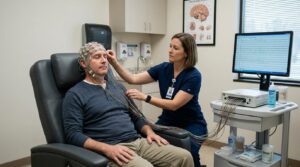
An EEG test (electroencephalogram) records the brain’s electrical activity through small sensors placed on the scalp, and it’s one of the most common tools neurologists use to look into seizures, fainting spells, and unexplained confusion. It’s painless, involves no radiation, and the wires only listen; they don’t send any current into your head. A routine…
If you sleep a full seven to nine hours and still fight to stay awake at your desk, in class, or behind the wheel, the problem may not be your habits. Narcolepsy and idiopathic hypersomnia are neurological sleep disorders in which the brain can’t hold a steady state of wakefulness, and both need a medical…
Most eye twitching is harmless. A flickering lower or upper eyelid, usually in one eye, is almost always eyelid myokymia, a benign twitch set off by poor sleep, stress, caffeine, or dry eyes, and it fades on its own within days to a few weeks. A twitch that lasts longer, forces the eye shut, affects…
View Topics