

Every summer, Texas heat sends people to the ground. A construction worker slides down against his truck. A grandmother waiting in line goes pale and drops. A teenager mowing the lawn wakes up on the grass with no memory of falling. Most of the time, this is heat syncope, a brief fainting spell tied to high temperatures, and the person is back to normal within minutes.
But not every fainting spell in the heat is that simple. Some episodes are early signs of a heart rhythm problem, an autonomic nervous system disorder, or another condition that surfaces under thermal stress. Long stretches of triple-digit afternoons, high humidity, and outdoor work that continues through the hottest months make this a common experience across Texas and also mean more chances that a fainting spell is something other than the heat alone.
This article covers how heat causes fainting, what a typical case looks like, which warning signs point to something more serious, and when to see a specialist.
This article is for educational purposes only and is not a substitute for professional medical advice. Do not self-diagnose a fainting episode. If you or someone near you has fainted, especially if it is the first time, consult a physician.
How Heat Actually Causes Fainting
The brain’s temperature control center works to keep core body temperature stable. When it gets hot outside, blood vessels near the skin widen so warm blood can release heat into the air, and sweat glands activate to cool the skin through evaporation. This is vasodilation, and while it’s effective at dissipating heat, it comes at a cost: a large volume of blood pools in the dilated vessels of the skin and abdomen rather than circulating centrally.
At the same time, sweating draws down fluid volume. Less fluid, combined with blood pooling in the skin, means less blood returns to the heart with each beat. Normally, the body compensates through a reflex involving sensors in the major blood vessels, which signal the heart to beat faster and vessels to tighten. Under heat stress, that reflex becomes less reliable, according to research on orthostatic intolerance during heat stress published in the National Institutes of Health’s PMC, since elevated core temperature interferes with the same signaling pathways the body needs for the compensation to work.
Add gravity pulling blood toward the legs when someone stands, and blood pressure can drop sharply. That drop produces the dizziness from heat that often precedes fainting, and if blood flow to the brain falls far enough, brief loss of consciousness follows. Heavy sweating also causes sodium loss, which disrupts fluid balance, helping explain why electrolyte imbalance symptoms like cramping and weakness often show up alongside heat syncope rather than on their own.
The Telltale Signs of “Simple” Heat Syncope
What is heat syncope in its most common form? It’s a fainting episode tied to heat exposure in someone who hasn’t yet acclimatized to hot conditions, and according to a clinical overview, it usually shows a consistent pattern:
- Clear trigger: standing for a long stretch outdoors, such as yard work or waiting in line in the sun.
- Brief warning period: lightheadedness, tunnel vision, or nausea for a minute or two beforehand.
- Short duration: loss of consciousness lasting seconds, not minutes.
- Fast, full recovery: orientation returns within minutes once the person is cooled and given fluids.
- No injury beyond the fall itself, no chest pain, no lingering confusion.
Risk tends to fade as a person acclimatizes to heat, which is one reason early heat waves in Texas tend to produce more fainting cases than the peak of August, once bodies have had time to adjust.
Red Flags That Suggest It’s Not Just the Heat
Certain features of a fainting episode should raise concern no matter how hot it was outside. According to Medscape’s clinical guidance on syncope evaluation, these heat exhaustion warning signs point toward a cardiac or neurological cause rather than a straightforward heat-related faint:
- Chest pain, palpitations, or difficulty breathing in heat, before or after the episode.
- Fainting while seated or lying down is more often linked to a cardiac cause than a heat-related one.
- No clear heat trigger, such as fainting indoors or in air conditioning.
- Sudden onset with little or no warning.
- Confusion that lingers well after waking up.
- Repeated fainting episodes within a short period.
- Loss of consciousness during physical exertion.
- Slurred speech, one-sided weakness, or a severe headache around the event.
A fainting spell after 20 minutes in 100-degree heat is a different clinical picture from one that occurs while sitting in a cool room. The second scenario points toward heat syncope causes that go beyond the thermometer and deserve a proper evaluation.
Conditions That Mimic or Worsen Heat Syncope
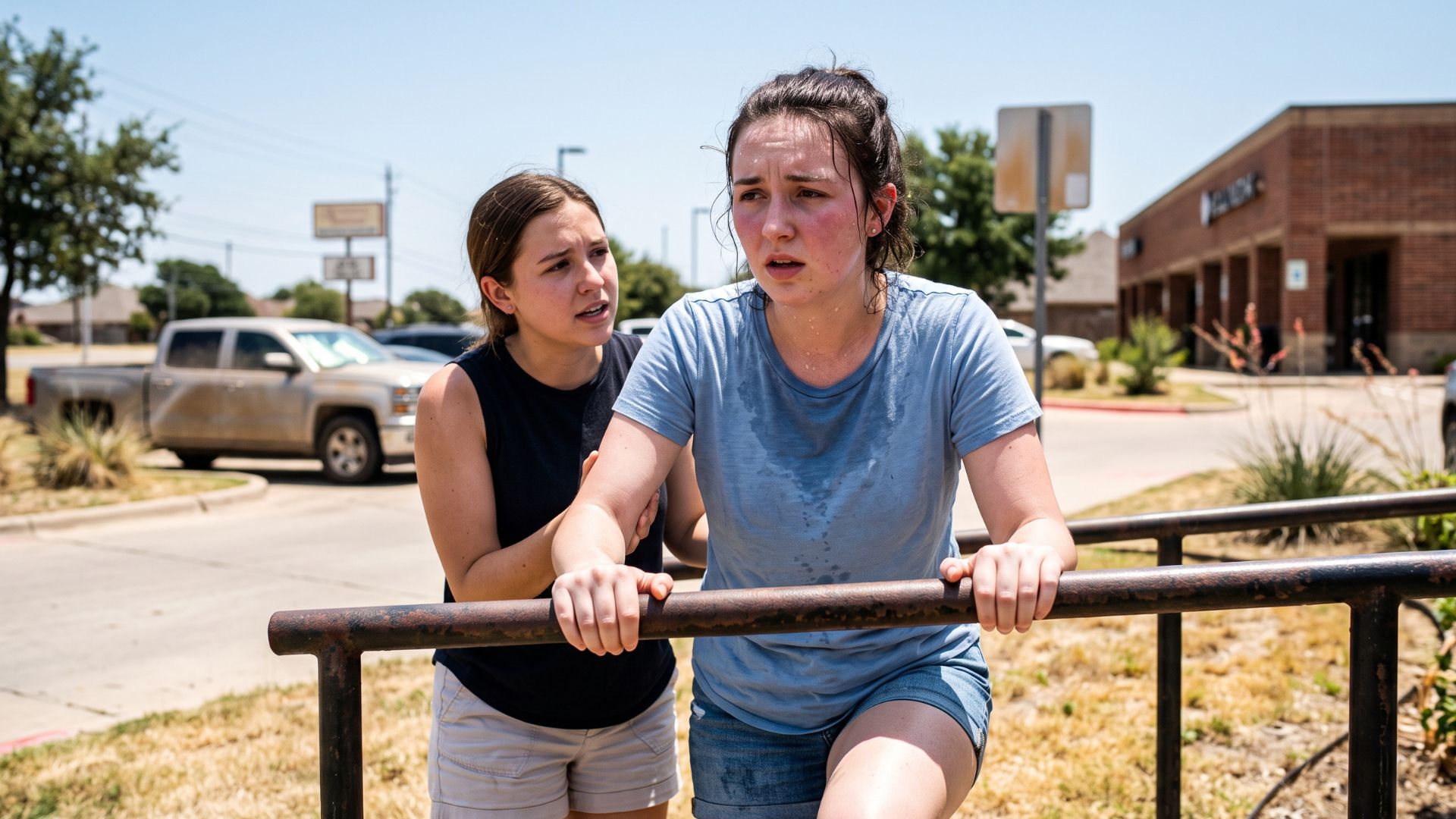
A few underlying conditions make people far more vulnerable to fainting in the heat, or resemble heat syncope while actually stemming from something else.
Postural orthostatic tachycardia syndrome (POTS), as described by Johns Hopkins Medicine, is an autonomic nervous system disorder where heart rate rises abnormally on standing. Heat tends to worsen it, as higher temperatures shift more blood toward the skin and reduce circulating volume, intensifying the orthostatic intolerance that already defines the condition. Because POTS symptoms overlap so closely with ordinary heat syncope symptoms, it often goes unrecognized until episodes become frequent.
Other forms of autonomic dysfunction follow a similar pattern. When the nerves regulating blood pressure and heart rate don’t respond appropriately to heat and upright posture, fainting can recur, even with modest heat exposure.
Cardiac arrhythmias are among the heart conditions that cause fainting and carry more risk than a typical heat-related faint. According to the Merck Manual Professional Edition, syncope that starts and ends abruptly, or that happens while lying down, points more toward an abnormal heart rhythm than toward heat, since vasovagal and orthostatic mechanisms rarely cause fainting in a recumbent position.
Medication interactions are easy to overlook. Diuretics, several blood pressure medications, and some antidepressants can impair the body’s ability to regulate temperature, which lowers the threshold for heat exhaustion and fainting. Anyone on regular medication who faints in the heat should review that list with a physician rather than assuming heat alone was responsible.
Anemia and heat intolerance are connected, too. Lower red blood cell counts reduce the blood’s oxygen-carrying capacity, and combined with heat-driven vasodilation, this can lower the point at which someone becomes lightheaded or faints.
Who’s Most at Risk in Texas Summers
Some groups face a meaningfully higher risk during the long Texas summer, and recognizing which category applies can help someone take precautions before a fainting episode happens rather than after:
- Outdoor workers, including those in construction, landscaping, and agriculture, face repeated, prolonged heat exposure. The CDC’s guidance on heat and outdoor workers notes that this population is more likely to become dehydrated and develop heat-related illness than people who spend most of the day indoors.
- Athletes and physically active people, including runners and youth sports participants training in August heat, add metabolic heat on top of environmental heat, and dehydration accumulates over the course of a workout.
- Older adults face several overlapping risks. Per the CDC’s guidance on heat and older adults, the body adjusts less efficiently to sudden temperature changes with age, chronic conditions can alter the body’s normal heat response, and many common prescription medications interfere with the body’s ability to regulate temperature or sweat.
- People on certain medications, particularly diuretics and beta-blockers, are more susceptible because these drugs directly affect fluid balance or heart rate response to heat.
- People with a prior fainting history, whether from POTS, vasovagal syncope, or an earlier heat-related episode, are more likely to faint again under similar conditions.
- People with heart disease or high blood pressure face compounded effects, since these conditions already strain the same circulatory system that heat stress is testing.
Prevention, When to See a Neurologist, and What Evaluation Involves
Hydration is the foundation of prevention. A general guideline for moderate outdoor activity is about one cup of water every 15 to 20 minutes, with electrolyte drinks recommended if sweating continues for several hours. Fluids shouldn’t wait until thirst appears, and sugary or alcoholic drinks should be avoided since they increase fluid loss. Anyone with medically restricted fluid intake, including people on diuretics or with kidney or heart conditions, should ask their physician how to adjust that guidance for hot weather.
Other practical steps include scheduling outdoor tasks for early morning or evening, taking breaks in the shade or in air conditioning, wearing loose, light-colored clothing, standing up slowly after sitting, and treating early lightheadedness as a cue to sit down immediately.
Heat syncope treatment for an uncomplicated episode is straightforward: move the person to a cooler environment, lay them down with legs elevated to help blood return to the heart, loosen tight clothing, and offer fluids once they’re alert enough to drink safely. Most people recover within minutes without needing emergency care.
A single fainting spell during a Texas heat wave is common and usually nothing more than an overwhelmed cooling system. A history of fainting that includes any of the warning signs above warrants a thorough evaluation.
If you or a loved one has experienced an unexplained fainting episode, the neurology team at Lone Star Neurology can help determine whether heat was the whole story or a sign of something that needs further care. Contact us today to schedule an evaluation.

 (123 votes, average: 4.55 out of 5)
 Loading...






I've given up... the stress her office staff has put me through is just not worth it. You can do so much better, please clean house, either change out your office staff, or find a way for them to be more efficient please. You have to do something. This is not how you want to run your practice. It leaves a very bad impression on your business.
Please, leave your review
Write a comment: