

You wake up, and something feels wrong. One side of your face isn’t moving quite right. You try to smile in the bathroom mirror, and the corner of your mouth doesn’t follow. You try to raise an eyebrow, and it stays put. You blink and realize your eye isn’t closing all the way.
That moment is terrifying, and it should be taken seriously. Sudden facial paralysis needs immediate medical attention, full stop, because the most dangerous possibility is stroke, and you can’t rule that out at home. Call 911 first. Once a stroke has been ruled out, the picture often becomes much less frightening: in many cases, what’s happening is Bell’s palsy – an alarming but typically treatable condition that most people recover from completely.
So what is Bell’s palsy, why it happens, what recovery looks like, and why the first 72 hours matter more than most people realize? Let’s break it down right now.
What Bell’s Palsy Is And How It Affects The Face
Bell’s palsy is a sudden, usually one-sided weakness or paralysis of the facial nerve (cranial nerve VII), the nerve that controls the muscles of expression on one side of your face. When it becomes inflamed and stops working properly, the effects are immediate and visible: the whole side of the face goes weak.
The full picture of facial weakness causes in Bell’s palsy typically includes:
- Drooping of one corner of the mouth, making it hard to smile or keep saliva from escaping
- Inability to wrinkle the brow or raise the eyebrow on the affected side
- Difficulty closing the eye completely; in some cases, the eye won’t close at all
- Changes in taste, often described as blunted or metallic
- Sensitivity to sound (hyperacusis) on the affected side, even normal sounds can feel uncomfortably loud
- Aching pain near the ear before or as weakness sets in
What Bell’s palsy does not do is equally important to know. It does not affect consciousness, arm or leg strength, or your ability to speak clearly (beyond the physical effect of a weak mouth on articulation). Everything else works normally. If anything beyond the face seems wrong – weakness in a limb, trouble speaking, confusion, severe headache – that changes the picture significantly.
How To Tell Bell’s Palsy From A Stroke
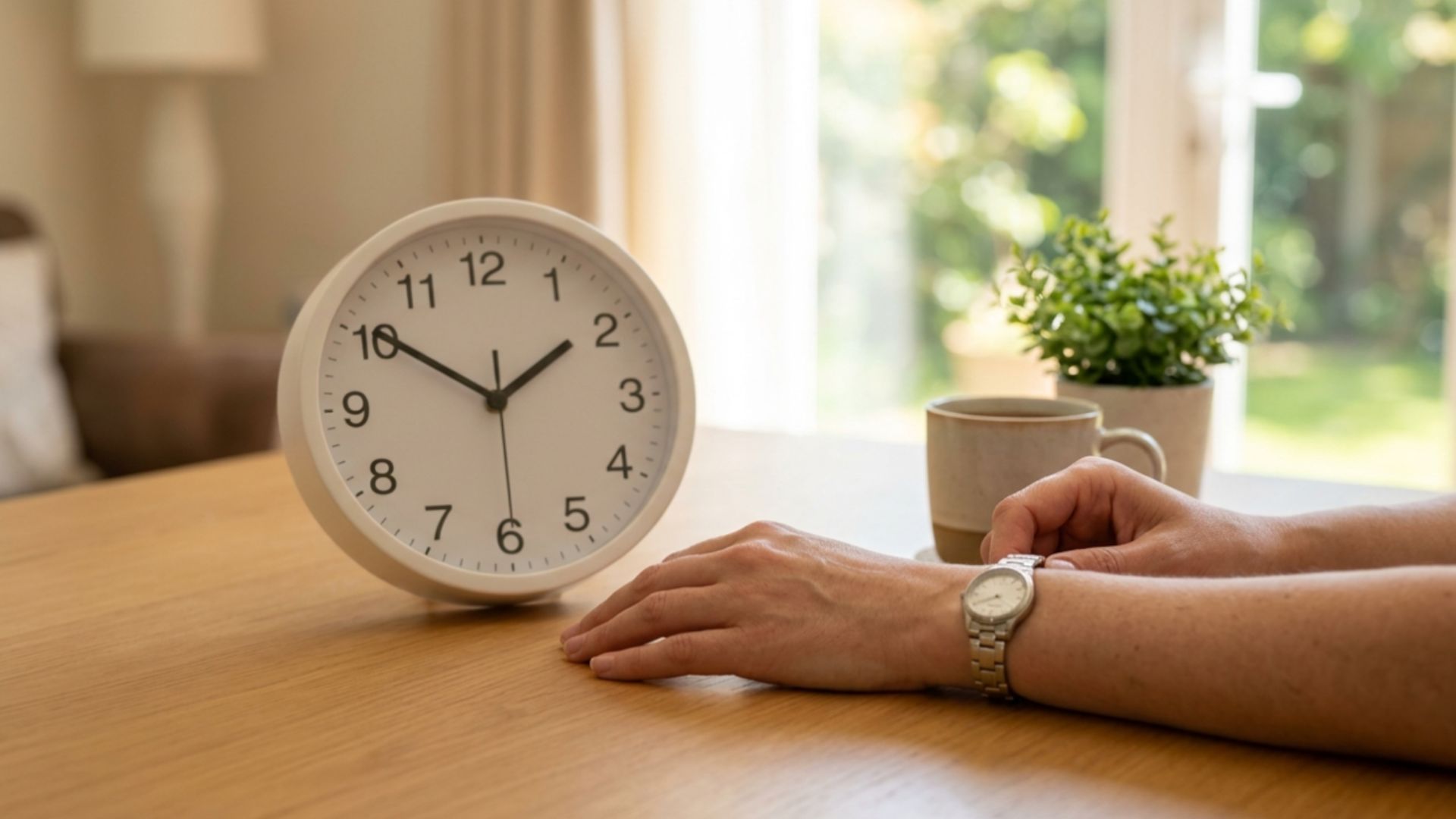
The most urgent distinction with any new facial weakness is stroke versus Bell’s palsy symptoms, and there’s one clinical detail that helps separate them fast.
In a stroke, the brain’s motor cortex controls the face. But the forehead muscles have a unique feature: they receive input from both hemispheres of the brain. This means that when a stroke damages one side of the brain, the forehead muscles on the affected side often still work – the other side of the brain picks up the slack. In Bell’s palsy, the nerve itself is affected before it reaches the brain. The entire facial nerve goes down, including the branch that serves the forehead. So if the forehead is also weak, if you genuinely cannot raise that eyebrow at all, Bell’s palsy becomes much more likely than a stroke.
That said, this distinction is for doctors to make, not for patients sitting at home. Any new, sudden facial weakness, drooping, or numbness requires calling 911 first. A physician confirms the diagnosis; you don’t have to figure it out yourself at the moment.
Common Triggers Behind Sudden Facial Weakness
So what causes Bell’s palsy? The honest answer is that we don’t always know; it’s technically classified as idiopathic, meaning no identifiable cause, in many cases. But research has consistently pointed to certain triggers and associated conditions:
- Viral reactivation. The most widely supported theory is that Bell’s palsy is triggered by reactivation of the herpes simplex virus (HSV-1), the same virus that causes cold sores, within the facial nerve. Herpes zoster (the chickenpox virus, which also causes shingles) is linked to a related but distinct condition called Ramsay Hunt syndrome. Both can produce facial weakness causes that mimic Bell’s palsy.
- Recent upper respiratory infection. Many patients report a cold or flu-like illness in the weeks before onset.
- Pregnancy. The third trimester significantly raises risk; pregnant women are roughly three times more likely to develop Bell’s palsy than the general population.
- Diabetes. People with diabetes are at higher risk, likely due to the nerve’s greater vulnerability.
- High stress. Stress is repeatedly cited as a possible trigger, likely through its role in immune suppression and viral reactivation.
Even with all of these factors, a notable portion of cases never have a clear cause identified. That uncertainty is frustrating, but it doesn’t change the treatment approach.
Key Symptoms And The Typical Recovery Timeline
One of the most reassuring things to know about Bell’s palsy recovery time is that the trajectory is almost always in the right direction.
Symptoms typically reach their maximum severity within 48 to 72 hours of onset and then plateau for a period before gradual improvement begins. The general arc:
- Days 1-3: Symptoms worsen and peak. This is when the nerve is most inflamed.
- Weeks 1-3: Plateau; symptoms are at their worst, but this phase is temporary.
- Weeks 3-12: Most patients begin to notice gradual improvement.
- 3 to 6 months: The majority of patients achieve full or near-full recovery.
Among the causes of facial weakness evaluated in Bell’s palsy studies, roughly 70% of patients who receive appropriate early treatment recover completely. Patients who present with mild or moderate weakness have better outcomes than those with complete paralysis from the start.
That said, some patients experience residual complications:
- Synkinesis is one of the more frustrating long-term effects: during recovery, nerves can regrow along the wrong pathways, producing involuntary co-movements. The best-known example is crocodile tears syndrome, in which a person tears up while eating rather than salivating.
- Dry eye or chronic tearing can persist even after motor function returns, because the branch of the facial nerve that controls tear production doesn’t always recover at the same rate as the movement branches.
- Incomplete closure of the eye is a significant short-term concern for the cornea and needs to be actively managed – this is not something to leave unattended.
Research confirms that treatment timing is the single most important factor in recovery outcomes. A 2023 study in the Journal of Clinical Medicine found that the best results were achieved in patients who received steroid treatment within 72 hours of symptom onset, with shorter recovery times and higher rates of complete resolution (Rim et al., 2023).
Proven Treatments That Speed Up Bell’s Palsy Recovery
The evidence base for Bell’s palsy treatment is well-established, and the window for maximum benefit is tight.
- Oral corticosteroids: the most important intervention. Prednisone started within 72 hours of symptom onset is the single most evidence-backed step in Bell’s palsy management. It reduces inflammation around the compressed facial nerve and substantially increases the probability of complete recovery. A 2025 review published in Cureus confirmed that early corticosteroid treatment is the standard of care, with the most benefit seen when treatment begins within the first two to three days (Gardner et al., 2025). Even a few extra days of waiting reduce the treatment’s effectiveness.
- Antiviral medications. Antivirals like acyclovir or valacyclovir are frequently added in moderate-to-severe cases on the rationale that if HSV reactivation is driving nerve inflammation, suppressing it may support recovery. Evidence on antivirals alone is mixed, but the combination of steroids plus antivirals is generally considered for more severe presentations.
- Eye care: non-negotiable. When the eye doesn’t close fully, the cornea is exposed and can dry out or become injured even during normal daily activities. Lubricating eye drops during the day and gentle taping of the eye closed at night are essential until closure is restored. Ophthalmology involvement is appropriate for patients with significant eye involvement.
- Facial physical therapy. Targeted exercises to retrain weakened muscles, prevent muscle wasting, and reduce the risk of synkinesis during recovery are a meaningful addition to medical treatment, particularly for patients who don’t show rapid early improvement. A physical therapist familiar with facial nerve rehabilitation can make a significant difference in long-term outcomes.
What doesn’t help: there’s no convincing evidence that acupuncture, electrical stimulation, or other alternative approaches change the overall recovery trajectory in Bell’s palsy, though they remain popular options. The core treatment remains steroids, eye protection, and time.
Trust Lone Star Neurology For Fast Bell’s Palsy Care
When it comes to Bell’s palsy, timing isn’t a soft recommendation, it’s the difference between a full recovery and a prolonged or incomplete one. The 72-hour window for starting steroids is real, and it closes fast.
At Lone Star Neurology, Bell’s palsy treatment Texas patients rely on starts with fast access. We offer same-week appointments at 17 DFW-area locations, so you don’t have to wait to be seen. When facial weakness appears, you need to be evaluated now.
What you can expect from an evaluation at Lone Star Neurology:
- Thorough neurological examination to confirm the diagnosis and rule out other causes of facial weakness, including stroke and less common conditions like Ramsay Hunt syndrome, Lyme disease, or tumors affecting the facial nerve
- EMG/nerve conduction studies are indicated to assess the degree of nerve involvement and help guide prognosis
- Immediate steroid prescription for appropriate candidates, coordinated with any needed imaging
- Eye management guidance to protect the cornea from the start
- Ongoing follow-up to track recovery, adjust treatment, and refer for facial physical therapy if the course warrants it
If you or someone in your family wakes up with a drooping face, don’t wait to see if it gets better on its own. The most effective window is now.
📞 Call us at 214-619-1910 or schedule online to request a same-week appointment.

 (141 votes, average: 4.71 out of 5)
 Loading...





I've given up... the stress her office staff has put me through is just not worth it. You can do so much better, please clean house, either change out your office staff, or find a way for them to be more efficient please. You have to do something. This is not how you want to run your practice. It leaves a very bad impression on your business.
Please, leave your review
Write a comment: