

For a lot of families, summer means one thing on repeat: training, tournaments, sports camps. The fields and gyms fill up, the schedule gets packed, and the energy is contagious. But there’s a flip side most people don’t talk about enough: summer is also when concussion recovery becomes one of the most urgent issues we see in our clinic.
Pushed too hard, too fast, a concussion that should have healed in two weeks can turn into months of lingering symptoms. The topic matters for parents, coaches, and athletes alike, because even a seemingly minor hit to the head deserves to be taken seriously and the summer season has a way of making that harder than it should be.
Once a concussion happens, the brain needs real time to heal. Any strain before that healing is complete can set concussion recovery back significantly and in the heat of a summer tournament, “come back quickly” tends to win out over caution far more often than it should. This guide is about why that trade-off is so dangerous and what real concussion safety looks like when the season is in full swing.
Why Summer Raises Concussion And Re-Injury Risk
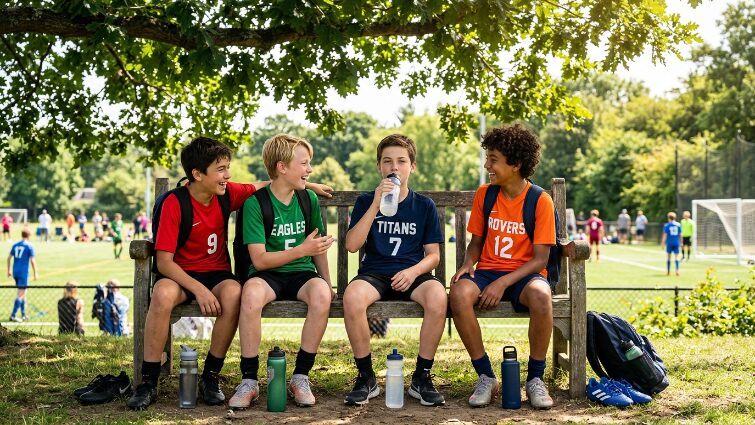
Summer is, statistically, a season of elevated risk. Camps run daily, tournaments stack up back-to-back, and young athletes log far more hours of contact than during a typical school season. Add Texas heat into the mix, and you get tired, less-focused kids with slower reaction times – exactly the conditions that produce a summer sports concussion.
Here’s the part that worries us most: when a brain hasn’t fully recovered from a previous hit, any added stress, physical or even just thermal, can dramatically worsen the underlying injury and raise the risk of a second one. Heat, daily training volume, and incomplete recovery don’t just add up; they compound on a brain that’s already vulnerable.
A few specific factors stack the deck during summer:
- Intensity. Many summer training programs run daily with little built-in recovery time, which increases the likelihood of cumulative, poorly managed injuries.
- Fatigue. Heat measurably affects physical endurance and cognitive processing speed. Slower reactions under high-temperature conditions translate directly into more contact-related head injuries.
- Pressure. Athletes regularly try to play through symptoms rather than risk losing a roster spot – a pattern that makes youth sports concussion cases especially dangerous, since young athletes are often the least likely to self-report.
- Underestimation. Mild symptoms get waved off as “just a bump,” which is exactly how repeat injuries happen.
Understanding Second Impact Syndrome
If there’s one concept every parent and coach needs to understand before the season starts, it’s second impact syndrome. A second blow to the head before a full recovery from a prior concussion can trigger a catastrophic chain reaction, and the consequences can be fatal.
This condition is rare, but it is overwhelmingly seen in teenagers and young athletes, whose brains are still developing and respond worse to repeated trauma. The danger lies in how fast it moves: even a relatively minor second impact can cause rapid brain swelling within minutes, leaving very little window for intervention. According to research, the original case reports describing this syndrome involved athletes who appeared functional immediately after a second hit, only to collapse minutes later (Cantu, Clin Sports Med., 1998).
A few things are worth internalizing about second impact syndrome:
- A young, still-developing brain tolerates repeated injury far worse than an adult brain.
- The second hit doesn’t need to be severe – it can significantly worsen the original injury even if it seems mild on its own.
- Rapid brain swelling can progress to loss of consciousness and life-threatening complications within minutes.
- The only reliable prevention is strict adherence to the full recovery protocol before any return to contact activity.
This is exactly why “when in doubt, sit it out” isn’t just a slogan, it’s the entire basis of modern concussion safety.
Summer Sports With The Highest Concussion Rates
Summer camps and tournaments concentrate contact and fall risk into a tight window, which is part of why concussion safety becomes such a pressing topic this time of year. A summer sports concussion doesn’t strike evenly across every activity, some sports carry meaningfully higher risk than others:
- Football. Football camps post some of the highest concussion rates of any youth sport, largely due to constant player-to-player collisions – roughly 5 to 8 cases per 1,000 athlete contacts.
- Soccer. Heading the ball and player collisions regularly produce mild to moderate concussions, with rates around 0.5 to 1.5 per 1,000 contacts.
- Cheerleading. Falls during stunts and lifts create a real risk of head injury – sometimes serious ones, given the height involved.
- Lacrosse. The combination of speed and hard contact pushes concussion rates to roughly 2 to 3 per 1,000 contacts.
- Baseball. Line-drive impacts and base-path collisions can cause sudden, unexpected head injuries.
- Skateboarding. Falls without protective gear remain one of the most common causes of concussion among teenagers, especially during unsupervised summer riding.
Knowing where the risk is concentrated lets families and coaches build in the right safeguards rather than treating every sport the same way.
A 5-Step Safe Return-To-Play Plan After A Concussion
Return to sports after concussion should never be rushed. It needs to be gradual and medically supervised, full stop. Coming back too early significantly raises the risk of both re-injury and longer-term complications, which is exactly why a structured, phased system matters so much.
The graduated protocol most clinicians follow includes five stages, with each phase lasting at least 24 hours. If symptoms return at any point, the athlete drops back to the previous level:
- Rest. Full symptom resolution at complete rest. No activity is permitted until symptoms are entirely gone.
- Light activity. Light aerobic movement (walking, slow stationary cycling) introduced carefully, without symptom return.
- Sport-specific exercises. Movements specific to the athlete’s sport, but with zero contact involved.
- Non-contact training. More complex drills, technique work, and coordination training, still without contact.
- Full contact. A complete return to play, only after medical clearance and total symptom resolution.
Following this kind of phased system, rather than a calendar-based “you’ll feel better in a week” guess, is what actually protects athletes from the cascading damage of returning too soon.
Warning Signs That Mean Stop Playing Right Now
In the middle of a summer tournament, recognizing when an athlete needs to stop immediately is one of the most important skills a parent or coach can have. A summer sports concussion is, frankly, a common occurrence at camps and tournaments and even mild symptoms can escalate quickly, which is exactly why ignoring early warning signs is so risky.
Any of the following symptoms should mean immediate removal from play and an urgent medical evaluation:
- Headache. Worsening pain after a hit can signal progressive brain injury.
- Vomiting. Repeated nausea or vomiting suggests possible intracranial irritation.
- Confusion. Increasing disorientation or trouble responding points to brain dysfunction.
- Seizures. Any seizure activity requires immediate emergency care.
- Unequal pupils. Uneven pupil size can signal a serious neurological problem.
- Drowsiness. Excessive sleepiness or difficulty waking the athlete is a major red flag.
- Weakness. Sudden loss of strength on one side of the body needs urgent attention.
- Speech changes. Slurred or disrupted speech indicates impaired brain function.
If you see any of these, don’t wait to see if it passes. Concussion recovery starts the moment the athlete is removed from play, not after the game ends.
Expert Concussion Care At Lone Star Neurology
Real concussion recovery takes more than rest at home – it takes professional evaluation that can actually tell you when it’s safe to return and how to avoid setting yourself up for re-injury. Concussion treatment Texas families trust starts with that kind of precision, not guesswork.
At Lone Star Neurology, we see this pattern often: an athlete is told their concussion was “mild,” sent home with general rest instructions, and never given a structured follow-up plan when symptoms linger longer than expected. A concussion is a functional injury, not a structural one – it disrupts neurochemistry and signaling in ways that standard imaging frequently doesn’t catch, which is exactly why specialized evaluation matters.
Our approach to concussion treatment that Texas athletes and families rely on includes:
- Diagnosis. Neuropsychological testing to assess memory, attention, and processing speed after injury.
- Balance. Vestibular therapy to address dizziness and balance problems common after a head injury.
- Progression. Step-by-step return-to-sport protocols that allow a safe path back to activity without risking relapse.
- Monitoring. Ongoing assessment that lets us adjust the treatment plan in real time as symptoms evolve.
- Support. A comprehensive approach that helps both athletes and parents understand what’s actually happening and what comes next.
If symptoms are lingering past two weeks, or if something about the recovery just doesn’t feel right, it’s worth a closer look. You can read more about how long concussion recovery typically takes and when to see a neurologist and about why post-concussion symptoms sometimes linger for weeks.
Call us at 214-619-1910 or schedule online to get a real evaluation, a clear plan, and a safe path back to the game.

 (120 votes, average: 4.53 out of 5)
 Loading...





I've given up... the stress her office staff has put me through is just not worth it. You can do so much better, please clean house, either change out your office staff, or find a way for them to be more efficient please. You have to do something. This is not how you want to run your practice. It leaves a very bad impression on your business.
Please, leave your review
Write a comment: