
Mon - Fri: 8:00AM - 5:00PM
Monday – Friday8:00AM - 5:00PM
Saturday Open for MRI
Sunday Closed
Migraine treatment same day as your first appointment.
or
Visit our Healow Portal 
Lewy body dementia is a progressive brain disease caused by clumps of alpha-synuclein. This protein builds up inside nerve cells and disrupts thinking, movement, sleep, and alertness from hour to hour. In many patients, it first shows itself through vivid hallucinations, physically acting out dreams, or an odd back-and-forth between clear days and foggy ones,…

A headache that hits suddenly and reaches full force in under a minute is called a thunderclap headache, and you should treat it as an emergency until a doctor proves otherwise. The cause everyone worries about is a ruptured brain aneurysm, which bleeds from a weak spot in an artery, although other conditions can produce…

A mini stroke, or transient ischemic attack (TIA), is a brief interruption of blood flow to part of the brain that causes stroke-like symptoms, such as a drooping face, a weak arm, or garbled speech, and then clears up, usually within minutes. It doesn’t leave obvious damage, but it warns that a full stroke may…
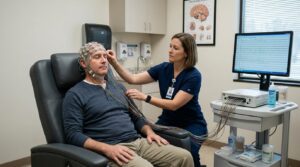
An EEG test (electroencephalogram) records the brain’s electrical activity through small sensors placed on the scalp, and it’s one of the most common tools neurologists use to look into seizures, fainting spells, and unexplained confusion. It’s painless, involves no radiation, and the wires only listen; they don’t send any current into your head. A routine…
View Topics
