

Pregnancy changes everything – including the way the nervous system functions. Hormonal shifts, increased blood volume, postural changes, and the physical demands of carrying a baby all affect neurological health in ways that most women aren’t warned about in advance. Some of these changes are completely normal. Others need attention.
Pregnancy and neurological symptoms exist on a wide spectrum. A mild headache or occasional tingling in the hands is usually nothing to worry about. Sudden vision changes, severe headache, or one-sided weakness are a different matter. Knowing where specific symptoms fall on that spectrum – and when to seek a professional opinion – is genuinely useful knowledge for any pregnant woman.
Common Headaches During Pregnancy And How To Manage Them
Headaches during pregnancy are among the most frequently reported neurological symptoms, and they’re particularly common in the first trimester when hormonal changes are most dramatic. Most are tension-type headaches – a dull, pressing discomfort caused by stress, fatigue, dehydration, or disrupted sleep. They’re uncomfortable but not dangerous.
Pregnancy migraines are more complex. Some women find their migraines improve during pregnancy, particularly after the first trimester, as estrogen levels stabilize. Others experience worsening attacks, and for women who have never had migraines before, pregnancy can sometimes trigger them for the first time.
Managing headaches during pregnancy safely requires awareness of what’s available and what isn’t. Many common pain medications are not recommended during pregnancy, which is why non-medication approaches become especially important:
- Hydration. Dehydration is a reliable headache trigger, and pregnant women need more fluid than usual. Keeping consistently hydrated throughout the day reduces headache frequency for many women.
- Regular sleep. Fatigue and irregular sleep patterns both increase the risk of headaches. A consistent sleep schedule matters more during pregnancy than at most other times.
- Identifying triggers. Certain foods, strong smells, bright light, and stress are common headache triggers that can often be managed with awareness and small adjustments.
- Rest and relaxation. Tension headaches, in particular, respond well to rest, gentle massage, and stress-reduction techniques.
When medication is needed, the choice of what’s safe in each trimester should always be made with a doctor’s guidance – not based on what was used before pregnancy.
When Pregnancy Migraines Require Neurological Attention
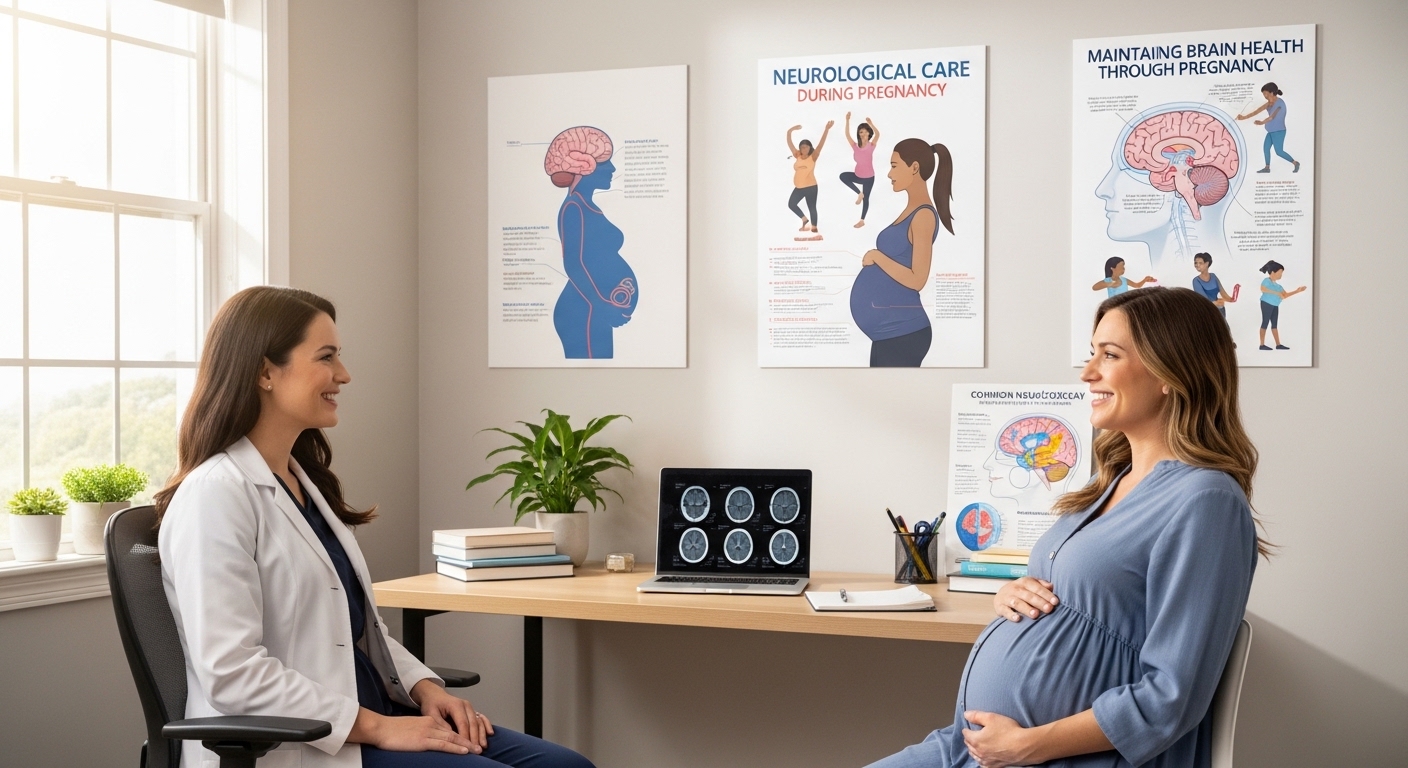
Most pregnancy migraines are manageable with careful trigger avoidance and safe symptomatic treatment. But some presentations of migraine during pregnancy warrant prompt neurological evaluation, because they can overlap with or mask more serious conditions.
Neurologist for pregnant women consultation is recommended when:
- Pain intensity changes significantly. A sudden, dramatic increase in headache severity – particularly if described as the worst headache ever experienced – is a red flag that requires immediate evaluation, not watchful waiting.
- Vision changes accompany the headache. Flashing lights and visual disturbances can be migraine aura, but they can also indicate dangerous vascular conditions. New visual symptoms during pregnancy should always be evaluated.
- Blood pressure is elevated, along with a headache. This combination raises the possibility of preeclampsia – a serious pregnancy complication that can escalate rapidly. High blood pressure with headache in the second or third trimester is a medical emergency.
- Headache is accompanied by severe nausea, vomiting, or neurological symptoms. These combinations warrant same-day evaluation.
Pregnancy migraines that follow a familiar pattern and respond to known safe management strategies are usually low-risk. The concern arises when the pattern changes, when new symptoms appear, or when other warning signs accompany the headache.
Understanding Numbness During Pregnancy And Its Causes
Numbness during pregnancy is another common complaint that ranges from entirely benign to requiring attention. The physical changes of pregnancy – fluid retention, postural shifts, pressure from the growing uterus – affect nerves throughout the body, leading to a variety of sensory symptoms.
Common causes of numbness during pregnancy:
- Carpal tunnel syndrome. This is probably the most frequent cause of hand and wrist numbness during pregnancy. Fluid retention increases pressure within the carpal tunnel in the wrist, compressing the median nerve. The result is tingling, numbness, and sometimes weakness in the thumb, index, and middle fingers – symptoms that are often worse at night and can disrupt sleep. For most women, this resolves after delivery as fluid levels normalize.
- General fluid retention. Beyond the carpal tunnel, fluid retention throughout the body can compress nerves in various locations, causing localized numbness or tingling that tends to shift and change as the pregnancy progresses.
- Sciatica. As the uterus enlarges, it can place pressure on the sciatic nerve, which runs from the lower back down through the legs. This can cause pain, numbness, or tingling that can extend from the lower back to the foot. Prolonged sitting or standing often makes it worse.
- Postural changes. The shifts in posture that accompany pregnancy – particularly in the later months – can place pressure on nerves that weren’t previously affected.
Most numbness during pregnancy is temporary and resolves postpartum. However, pregnancy and neurological symptoms that are sudden, severe, or involve both sides of the body, or that are accompanied by weakness, should be evaluated promptly. These patterns can occasionally indicate conditions unrelated to the normal physiological changes of pregnancy.
Seizures During Pregnancy: Risks And Safe Management
Seizures during pregnancy require careful medical management because the stakes involve both the mother and the developing baby. Two distinct situations can give rise to seizures during pregnancy – pre-existing epilepsy and eclampsia – and each requires a different approach.
- Epilepsy during pregnancy:
Women with epilepsy who are planning to become pregnant benefit enormously from pre-conception consultation with a neurologist. Pregnancy affects how antiepileptic drugs are absorbed and processed in the body, which means blood levels of medications can change significantly even when doses remain constant. Regular monitoring is essential throughout pregnancy to ensure seizure control is maintained. Some antiepileptic medications carry risks to fetal development. In many cases, these can be addressed through medication adjustment before or early in pregnancy, which is why planning matters so much.
- Eclampsia:
Eclampsia is a serious complication of pregnancy characterized by high blood pressure and seizures. It typically develops in the third trimester or around the time of delivery and can be life-threatening without prompt treatment. Symptoms that may precede eclamptic seizures include severe headache, visual disturbances, upper abdominal pain, and significant swelling. Any pregnant woman experiencing these symptoms together needs emergency evaluation.
A neurologist for pregnant women plays an important role in managing both situations – providing guidance on safe medication choices, monitoring neurological status, and coordinating with the obstetric team to ensure comprehensive care.
Pregnancy-Safe Neurological Treatment And Medication Options
Treating neurological symptoms during pregnancy requires balancing effective symptom management with fetal safety – and that balance looks different depending on the trimester, the specific condition, and the severity of symptoms.
Key principles of pregnancy and neurological symptoms management:
- Medication selection by trimester. Drugs that are safe in one trimester may not be recommended in another. A neurologist who works with pregnant patients understands these distinctions and selects treatments accordingly, taking the full clinical picture into account.
- Non-medication approaches first. For headaches during pregnancy and other milder neurological symptoms, non-drug strategies – physical therapy, relaxation techniques, biofeedback, acupuncture, and lifestyle adjustments – are preferred as first-line management whenever they’re sufficient.
- Ongoing monitoring. Regular check-ins allow treatment to be adjusted as the pregnancy progresses and as the woman’s neurological status changes. What works well at 12 weeks may need revisiting at 28 weeks.
- Coordinated care. The best outcomes for pregnant women with neurological conditions come from neurologists and obstetricians working together. LoneStar Neurology’s team communicates with other members of a patient’s care team to ensure that neurological management aligns with the overall pregnancy care plan.
Pregnancy migraines, epilepsy, carpal tunnel syndrome, sciatica, and other neurological conditions are all manageable during pregnancy with the right approach. The key is that management decisions are made by specialists who understand both the neurological and obstetric dimensions of the situation.
Find A Neurologist Who Specializes In Pregnancy Care
Neurological symptoms during pregnancy deserve specialist attention – not because most of them are dangerous, but because determining which ones are and which aren’t requires expertise. A neurologist for pregnant women brings specific knowledge about how pregnancy alters neurological function, which symptoms are within normal range, and when intervention is needed.
LoneStar Neurology sees pregnant patients experiencing headaches during pregnancy, numbness during pregnancy, migraine changes, seizure management needs, and other neurological concerns across its 17 Texas locations. The team provides individualized evaluation and treatment plans that account for the pregnancy itself – not just the neurological condition in isolation.
Benefits of specialized neurological care during pregnancy:
- Accurate assessment. A neurologist experienced with pregnant patients can distinguish normal pregnancy-related neurological changes from symptoms requiring treatment.
- Safe treatment planning. Medication and non-medication options are selected with fetal safety as a core consideration, not an afterthought.
- Peace of mind. Understanding which symptoms are normal and which need attention reduces the anxiety that comes with uncertainty – and anxiety itself is a headache trigger.
- Continuity. Regular monitoring throughout the pregnancy ensures that changes in neurological status are caught and addressed promptly.
If you’re pregnant and experiencing neurological symptoms that concern you – or if you have a pre-existing neurological condition and are planning a pregnancy – a consultation with LoneStar Neurology is a practical and important step.

 (102 votes, average: 4.76 out of 5)
 Loading...







I've given up... the stress her office staff has put me through is just not worth it. You can do so much better, please clean house, either change out your office staff, or find a way for them to be more efficient please. You have to do something. This is not how you want to run your practice. It leaves a very bad impression on your business.
Please, leave your review
Write a comment: