

Some patients arrive at a neurologist’s office having been told by multiple prior providers that their episodes are “not real” or that nothing is neurologically wrong. In most cases, the truth is more nuanced and more treatable: psychogenic nonepileptic seizures are genuine neurological events that look like epilepsy, feel like epilepsy, and are frightening in the same way as epilepsy, but they originate from a different mechanism entirely and require a completely different treatment approach.
The fact that they don’t involve abnormal brain electrical activity doesn’t make them less real. It means they have been misunderstood, frequently misdiagnosed, and too often managed with medications that cannot possibly help. Getting to a correct diagnosis is the first meaningful step for most patients who have been living with psychogenic nonepileptic seizures without knowing that’s what they were dealing with.
What PNES Is and How It Differs from Epilepsy
The defining difference between PNES and epilepsy comes down to what is happening in the brain during an episode. Epileptic seizures are generated by abnormal, synchronized electrical discharges that are visible on EEG as clearly pathological activity during the event itself. In PNES, those discharges are absent: the EEG recorded during an actual episode is normal, meaning the brain shows no electrical pattern consistent with epilepsy even while the patient appears to be seizing.
Understanding the pseudoseizure vs seizure distinction matters not just diagnostically but in how the condition is communicated to patients. The older term “pseudoseizure” has largely been retired from modern neurology because “pseudo” implies something fabricated or false, and these episodes are neither. Functional seizures are now the preferred clinical term, reflecting a more accurate framework: these are real events involving a dysfunction in how the brain generates motor and behavioral responses under certain conditions.
How a diagnosis is framed directly affects whether patients engage with treatment. Patients told they had “fake seizures” consistently rejected the diagnosis and disengaged from care; those who received a clear, non-stigmatizing explanation of functional seizures as a recognized neurological condition engaged with the therapeutic process far more effectively.
What PNES Episodes Look Like
The presentation of psychogenic nonepileptic seizures varies considerably between patients, and there is no single definitive appearance that identifies them with certainty. That said, certain features occur more frequently in PNES than in epileptic seizures and carry meaningful clinical weight when assessing an individual’s episode pattern.
Features more characteristic of nonepileptic seizures compared to epileptic ones include:
- Eyes closed during the episode, whereas most convulsive epileptic seizures involve eyes open or deviated upward
- Side-to-side head movements rather than sustained tonic posturing
- Pelvic thrusting or back arching with some preserved awareness
- Duration longer than two minutes, often extending to five or ten
- Rapid return to full alertness and orientation immediately after the event ends
Shaking that waxes and wanes in intensity, rather than the rhythmic clonic jerking of a generalized tonic-clonic seizure, is another distinguishing pattern. At the same time, PNES can closely mimic a grand mal seizure in appearance, which is precisely why clinical impression alone, without capturing an episode on video-EEG, cannot reliably confirm or exclude the diagnosis.
What Causes Psychogenic Nonepileptic Seizures
Psychogenic non-epileptic seizure episodes are understood as the body’s physical expression of psychological distress that the nervous system cannot process and discharge through ordinary cognitive or emotional channels. The precise neurobiological mechanism is still being mapped, but the association with psychological history is well established across decades of clinical research.
Psychogenic seizure events are significantly more common in patients with a history of trauma, and the range of relevant backgrounds is broader than many people expect. Contributing psychological factors commonly include:
- Physical, sexual, or emotional abuse, often beginning in childhood
- PTSD, which is among the most consistently identified comorbidities in research populations
- Anxiety disorders and panic disorder, where physiological arousal becomes difficult to regulate
- Depression, dissociative disorders, and histories of chronic emotional conflict or invalidation
One point that deserves explicit emphasis: patients are not producing these episodes deliberately. The episodes are involuntary, and framing them as a conscious choice or performance actively undermines any chance of successful treatment. Many patients also carry significant medical trauma from years of misdiagnosis and unnecessary medications, which the treatment process needs to address alongside the primary psychological factors.
How Neurologists Diagnose PNES
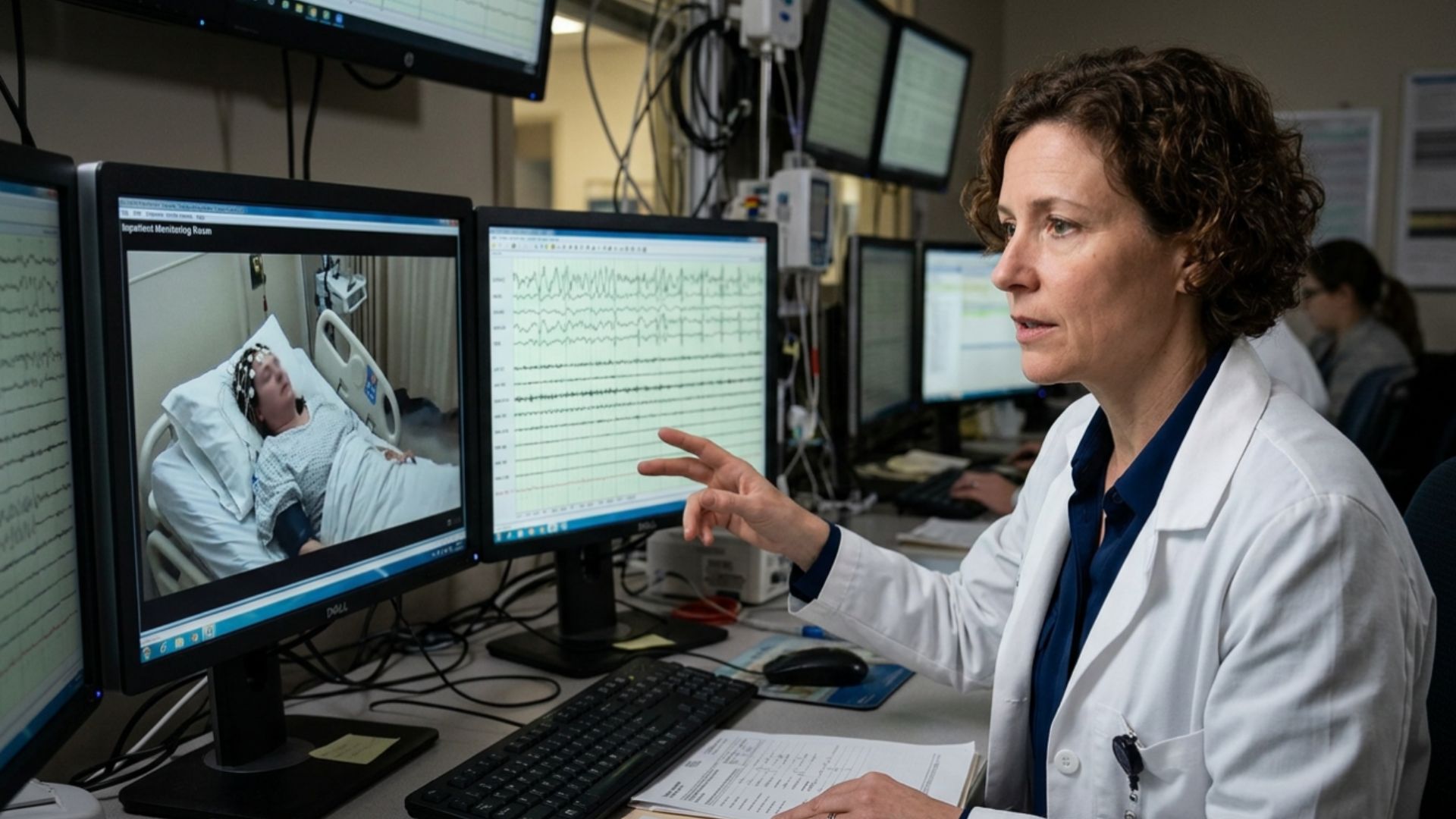
The gold standard for diagnosing psychogenic nonepileptic seizures is video-EEG monitoring: a continuous recording that simultaneously captures brain electrical activity and video of the patient during an actual episode. When a typical event is recorded showing clear behavioral seizure features alongside a completely normal EEG, the diagnosis can be made with a high degree of confidence, and no other test provides this level of diagnostic certainty.
A routine EEG performed between episodes is not sufficient for this diagnosis and is frequently misleading. Roughly 20 to 40 percent of patients with epilepsy have normal interictal EEGs, meaning a normal routine study does not distinguish PNES from epilepsy. Conversely, mild non-specific EEG abnormalities have been used inappropriately to justify epilepsy diagnoses in patients who actually had PNES, delaying correct treatment for years.
Clinical history and seizure semiology analysis contribute essential supporting context: the pattern of episodes, their duration, the motor features involved, and whether they cluster around identifiable emotional circumstances all inform the pre-monitoring picture. Some patients carry concurrent diagnoses of both epilepsy and PNES, making video-EEG monitoring especially important for accurately separating which events are which and ensuring each is treated appropriately.
Treatment Approaches for PNES
Pseudoseizure treatment is grounded in psychology rather than pharmacology, which represents one of the more significant reorientations patients face after receiving this diagnosis. The primary evidence-based intervention is cognitive behavioral therapy adapted specifically for seizure disorders, which helps patients identify the psychological triggers and internal mechanisms that precede episodes and develop effective alternative responses before those patterns culminate in an event.
Psychotherapy addressing underlying trauma is an equally important component when relevant history is present. PTSD-focused approaches, including trauma-focused CBT and EMDR, have demonstrated benefit in patients whose episodes are linked to unprocessed traumatic history, and this work often needs to happen in parallel with the seizure-focused CBT rather than sequentially.
Gradual, supervised reduction of anti-seizure medications is another key element of management for patients who were previously diagnosed with epilepsy and are currently taking drugs that provide no benefit for their actual condition. When comorbid depression or anxiety is contributing significantly to episode frequency, psychiatric medication may be appropriate, not as a treatment for the seizures themselves but for the conditions that fuel them.
Treatment works best when the diagnosis is communicated clearly and without stigma, with a credible clinical explanation of what is actually happening. Patients who understand the mechanism are substantially more likely to engage with therapy than those who receive the diagnosis as an afterthought.
Living with PNES and Reducing Episodes
Many patients find that understanding the diagnosis is itself a turning point, particularly the recognition that a pseudoseizure involves real neurological and psychological processes rather than weakness or manipulation, and that consistent engagement with treatment often reduces or eliminates episodes over time.
Day-to-day management centers on identifying personal triggers, which vary between patients but frequently include emotional conflict, sensory overload, sleep disruption, or specific situational stressors that carry unresolved emotional weight. Developing advanced coping strategies for those triggers, with support from a therapist experienced in functional neurological disorders, measurably reduces episode frequency over the course of treatment.
Educating family members and close contacts also has practical value. When people in a patient’s immediate environment understand that an episode is not an epileptic emergency, they respond more calmly, thereby removing unintentional reinforcement and reducing the distress cycle that can precede such events. Many patients describe genuine relief at the diagnosis once it is explained properly, because it means living without anti-seizure medication indefinitely is a real and achievable outcome.
When to See a Neurologist About Seizure-Like Episodes
A neurological evaluation is the appropriate next step when seizure-like episodes are recurring, when episodes are not responding to anti-epileptic drugs, when the features of an event are atypical for epilepsy, or when events appear reliably connected to emotional stress or interpersonal conflict.
PNES seizures require a specialist with access to video-EEG monitoring to confirm the diagnosis, and that confirmation is what allows the right treatment to begin. Continuing to manage these episodes as epilepsy without capturing an event on video-EEG delays appropriate care and extends the period of unnecessary medication.
At Lone Star Neurology, epilepsy monitoring and PNES evaluation are available across our 18 DFW locations, with clinical experience to guide both the diagnostic process and the transition to the right treatment path.
FAQ
Are psychogenic nonepileptic seizures real or faked?
They are real. PNES episodes involve genuine changes in motor function, awareness, and neurological processing that the patient is not consciously producing or controlling. The fact that they are driven by psychological mechanisms rather than abnormal electrical brain activity does not make them fabricated; it makes them a different category of neurological event that requires a different category of treatment.
Can PNES and epilepsy occur in the same patient?
They can, and the coexistence is more common than most patients expect. Roughly 10 to 30 percent of patients diagnosed with PNES also have documented epilepsy. This overlap is one of the strongest arguments for video-EEG monitoring: it allows individual episodes to be characterized, enabling epileptic and PNES events to be treated separately and accurately.
Do anti-seizure medications help with PNES?
They do not. Anti-epileptic drugs have no established benefit for PNES and, in some cases, contribute to unnecessary side effects and further delay of effective treatment. Safe, supervised tapering of those medications is typically a part of the management plan for patients who were previously misdiagnosed.
What is the difference between a pseudoseizure and an epileptic seizure?
An epileptic seizure is caused by abnormal electrical discharges in the brain that are measurable on an EEG during the event. A pseudoseizure resembles a seizure outwardly but occurs with completely normal brain electrical activity, meaning the mechanism is functional and psychological rather than epileptic.
Can PNES go away with treatment?
Yes, for many patients. Consistent engagement with CBT and psychotherapy, combined with addressing underlying trauma or anxiety, significantly reduces or eliminates episodes in a meaningful proportion of patients. Complete resolution is achievable, particularly when the diagnosis is made early and treatment begins without extended delay.

 (113 votes, average: 4.66 out of 5)
 Loading...





I've given up... the stress her office staff has put me through is just not worth it. You can do so much better, please clean house, either change out your office staff, or find a way for them to be more efficient please. You have to do something. This is not how you want to run your practice. It leaves a very bad impression on your business.
Please, leave your review
Write a comment: