

A typical feature of ocular myasthenia gravis is that the symptoms change over the course of the day. In the morning, the eyelids may look almost normal, while by evening one eye can be partly covered, and double vision or difficulty holding the gaze steady may appear. Rest usually eases these problems, but they tend to return after long stretches of reading or computer work.
Many people first visit an eye doctor, even though the eye itself often looks healthy during the exam, because the problem lies in the signal that travels from the nerve to the muscles that move the eyes and lift the eyelids. A myasthenia gravis drooping eyelid is frequently blamed on tiredness or age, yet it can be the first noticeable sign of the disease.
This article is for general education and does not replace a medical examination. If you notice a drooping eyelid or double vision, please see a doctor instead of trying to manage it at home.
What Myasthenia Gravis Is
To answer the question, what is myasthenia gravis, it helps to start with how a muscle normally receives its instructions. The nerve ending releases acetylcholine, a chemical messenger that tells the muscle to contract. In myasthenia gravis, a long-term autoimmune disease, the immune system produces antibodies that attack parts of the neuromuscular junction, so the message reaches the muscle more weakly and the muscle tires quickly with repeated use. Doctors divide the illness into several forms, including ocular, bulbar, and generalized myasthenia gravis, depending on which muscles are affected.
Muscle strength in myasthenia gravis varies markedly with effort, since a short rest often restores part of the function that repeated movements have worn down. The muscles that move the eyes and lift the eyelids are usually affected first because they work constantly, which is why a drooping eyelid is so often the opening sign. In some people, the symptoms of myasthenia gravis later extend to the face, neck, arms, or legs. According to the American Academy of Ophthalmology’s reference, many people whose first signs are in the eyes develop weakness elsewhere, usually within the first couple of years, although estimates differ between studies. Patients can consult our providers in locations such as Greenville and others.
The Eye Symptoms in Detail
Eye symptoms can seem insignificant at first, since one eye may look slightly smaller or a single image may occasionally split into two. Nevertheless, these symptoms of myasthenia gravis can seriously affect reading, driving, and working in front of a screen, and their intensity usually depends on exertion and rest. The most common myasthenia gravis symptoms in the eyes include:
- Ptosis. The upper eyelid droops because the muscle that lifts it has become weak, and this is usually more noticeable on one side, although the affected side may change during the day.
- Double vision. Because the eye muscles tire unevenly, the person sees two images of the same object, either side by side or one above the other, and the second image usually disappears when one eye is covered.
- Triggers. Long periods of reading, phone use and driving increase eye fatigue, and anyone whose double vision makes the road unsafe should stop driving and contact a doctor.
This kind of drooping eyelid is described in more detail in an article on ptosis in myasthenia gravis. Sudden double vision together with a severe headache, loss of balance, or weakness in a limb requires immediate medical evaluation.
What Else Causes a Droopy Lid or Double Vision
A drooping eyelid and double vision do not always mean myasthenia gravis, because age-related changes, cranial nerve disorders, thyroid disease, and acute neurological conditions can cause the same complaints. Doctors therefore consider when the symptoms began, how long they last, and how quickly they developed. The most frequent causes of ptosis and double vision are:
- Age. Eyelid tissue stretches over the years, and the muscle that lifts the lid can weaken, which produces a droop that develops gradually and does not fade and return with rest the way myasthenia does.
- Nerve. A third cranial nerve palsy can cause a droopy lid, double vision, and limited eye movement, often with a widened pupil. If an aneurysm is pressing on the nerve, the situation can be an emergency.
- Horner syndrome. A disturbance of the sympathetic nervous system produces a mild droop, a smaller pupil, and sometimes reduced sweating on one side of the face.
- Thyroid. In thyroid eye disease, inflammation and swelling around the eyes can cause bulging, discomfort, limited movement, and double vision.
- Stroke. Sudden double vision accompanied by dizziness, poor coordination, limb weakness, a drooping face, or slurred speech may signal a stroke, and the difference between a mini stroke and a stroke does not change the need to call 911.
In general, ptosis causes and double vision causes range from slow, harmless changes to dangerous conditions, so a sudden onset, a severe headache, or a dilated pupil requires immediate evaluation. Pupils are normally unaffected in myasthenia gravis, which means that a widened pupil together with a droopy lid points to another cause.
How It Is Diagnosed
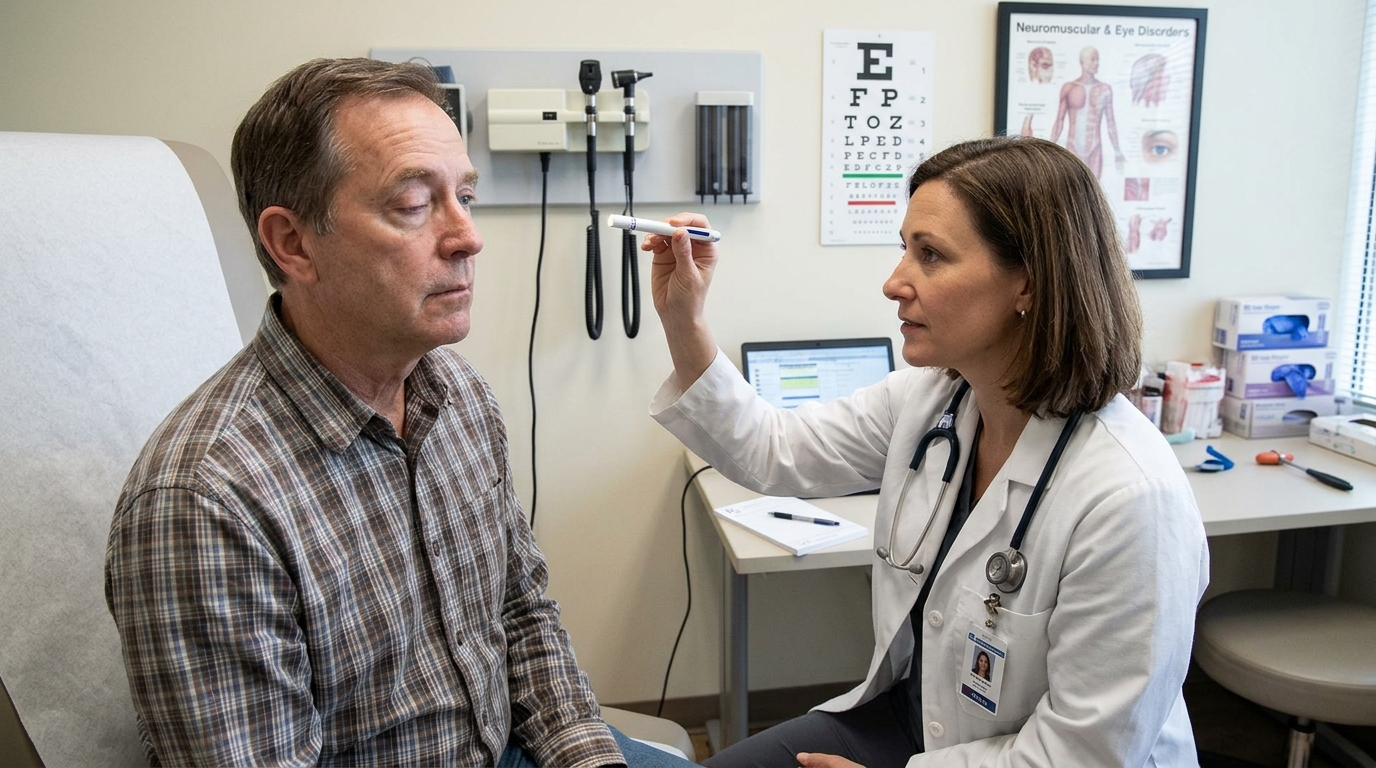
Diagnosis begins with a detailed description of the symptoms, and the doctor tries to determine whether the drooping eyelid or double vision worsens with prolonged use of the eye muscles. A complete myasthenia gravis diagnosis combines history, examination, and additional tests, since no single result settles the question. The usual steps are:
- History. The doctor clarifies when the symptoms began, how long they last, and how they relate to exertion.
- Exam. The doctor checks the position of the eyelids, the eye movements, and the response of the muscles to repeated effort, for example, by asking you to hold your gaze upward for a while.
- Ice pack. During the ice pack test, myasthenia gravis specialists place a cold pack on the closed eyelid for a few minutes and recheck lid height; an improvement of more than 2 mm is considered positive, according to EyeWiki.
- Antibodies. Blood tests look for acetylcholine receptor antibodies and other antibodies such as MuS; in purely ocular disease, only about half of patients test positive, so a negative result does not rule out the diagnosis.
- Electrophysiology. Repeated nerve stimulation looks for a fading muscle response, while single fiber EMG is more sensitive. We can arrange EMG and nerve conduction studies; call 214-619-1910 to confirm the location nearest you.
- Imaging. CT or MRI of the chest helps evaluate the thymus gland for enlargement or a thymoma, and our locations are open on Saturdays for MRI.
Treatment and What to Expect
Treatment for ocular myasthenia gravis aims to reduce muscle weakness, improve nerve transmission, and control the overactive immune response; the choice depends on symptom severity, whether the disease is limited to the eyes, and the person’s general health. The main options are:
- Cholinesterase inhibitors such as pyridostigmine keep acetylcholine active at the neuromuscular junction longer, and side effects can include stomach cramps, loose stools, and extra saliva.
- Corticosteroids and other immunosuppressive drugs reduce antibody production. They are used when symptoms significantly affect daily life, and their side effects can include weight gain, mood changes, higher blood sugar, and a greater risk of infection.
- Thymectomy, the removal of the thymus gland, is advisable in some patients, especially those with a thymoma, although its role in purely ocular disease is still debated.
- Lid crutches support the upper eyelid mechanically in an open position, and prism glasses can reduce double vision for some people.
Many people with myasthenia achieve good control of their myasthenia gravis symptoms with the right treatment and regular monitoring. The National Institute of Neurological Disorders and Stroke notes that there is no known cure, although some people go into remission.
Warning Signs and When to Be Seen
A drooping eyelid or double vision that comes and goes and becomes worse during the day is a reason to make an appointment with a doctor. Because myasthenia can affect many muscle groups, the first signs are not always limited to vision, so it is sensible to discuss symptoms of myasthenia gravis with a doctor whenever they recur or worsen. Patients should seek help in the following situations:
- If the upper eyelid periodically droops, especially after prolonged reading or toward the end of the day, a neurologist or an ophthalmologist should evaluate it.
- If the jaw tires while eating and solid food becomes hard to chew near the end of a meal, the chewing muscles may be involved.
- If the voice becomes quieter or less clear during a long conversation, the muscles used for speech may be tiring.
- If swallowing becomes difficult or you feel unable to take a full breath, this is an emergency and requires calling 911.
- Infections, fever, sleep deprivation and severe stress can make the symptoms worse.
Some medicines can also worsen myasthenia, and NINDS notes that common drugs such as statins may rarely do so, so patients should talk to their doctor before starting anything new. Anyone who notices signs of ocular myasthenia gravis should consult a neurologist, and appointments can be booked by calling 214-619-1910 or you can book online.








Please, leave your review
Write a comment: