

It often starts with something small. You’re standing in line at the H-E-B, and a patch of skin on the outside of your thigh begins to burn, like a mild sunburn under your jeans. You sit down in the car, and it fades. The next day it’s back.
Your leg works fine. You can walk, climb stairs, kneel to tie a shoe. Only the skin feels wrong, usually in one oval patch. That combination is the classic picture of meralgia paresthetica, a condition where a small sensory nerve gets squeezed near the front of the hip bone.
Burning thigh pain like this can feel alarming, especially when you’re not sure what’s behind it. The reassuring part is that in most people, it isn’t a spine emergency, and it tends to improve once the pressure on the nerve is relieved. Below we’ll walk through how it feels, why it starts, how doctors tell it apart from look-alikes, and what usually helps.
Medical disclaimer: This article is for general information only and doesn’t replace an exam by a doctor. Please don’t self-diagnose or start treatment on your own; talk to a qualified provider about your symptoms.
One Nerve, One Patch of Skin
The outer thigh gets its feeling from a single nerve called the lateral femoral cutaneous nerve. It starts from the L2 and L3 roots in the lower back, travels through the pelvis, and then has to squeeze under a tough band of tissue in the groin (the inguinal ligament), right next to the bony point you can feel at the front of your hip. That tight corner is where trouble usually begins.
Here’s the detail that explains almost everything about this condition. According to StatPearls, a peer-reviewed reference hosted by the NIH, the lateral femoral cutaneous nerve is purely sensory. It carries touch, temperature, and pain signals from the skin. It doesn’t move a single muscle.
So when it gets pinched, you feel it – burning, tingling, numbness. Doctors call that pins-and-needles sensation paresthesia, which is literally half of the condition’s name. But your strength stays normal, because no muscle depends on this nerve.
That’s also why real leg weakness doesn’t fit the picture. If your knee buckles, if lifting the leg into the car feels hard, or if you’re tripping, a neurologist will look for another cause, often a nerve root problem in the lumbar spine.
What It Feels Like
People describe it in surprisingly similar ways. “Like a sunburn I can’t see.” “Like ants under the skin.” “My thigh is asleep, but only on the outside.” Most meralgia paresthetica symptoms stay on one leg, and the patch rarely goes below the knee.
Common signs include:
- Burning or hot skin on the outer or front outer thigh
- Tingling or brief electric zaps that come out of nowhere
- A numb patch where touch feels dull, almost like it’s through a layer of fabric
- Skin that hates being touched, so the seam of your pants or a blanket at night suddenly bothers you
- Symptoms that get worse after standing or walking for a while and ease when you sit
Some people have mild tingling once a week. Others have a constant burn that makes them shift their weight all day at work. Both ends are possible.
What doesn’t usually belong here: pain shooting from the lower back down to the foot, true weakness, or changed reflexes. Those meralgia paresthetica symptoms are typically limited to skin sensation, so anything beyond that deserves a closer look.
Why It Starts
In many patients, there’s a clear “aha” moment once we start asking questions. New work pants, a heavier-duty belt, twenty pounds gained over a stressful year, a third-trimester pregnancy. The common meralgia paresthetica causes almost all to come down to pressure or stretch at that groin corner.
Typical meralgia paresthetica causes we hear about:
- Tight jeans, low-rise waistbands, shapewear, or a belt cinched below the hip bones
- Heavy tool belts, police and security duty belts, or tactical gear worn for long shifts
- Weight gain, especially around the belly, which pushes on the ligament from inside
- Pregnancy, when the growing belly and changes in posture add pressure
- Hip or spine surgery, sometimes from how the body was positioned on the operating table
- Diabetes, which makes nerves more sensitive to pressure in general
- Occasionally a seat belt injury, a long period of standing, or intense exercise
For pregnant patients, the good news is that this often settles after delivery. It’s one of several neurological problems in pregnancy that are usually temporary, though it still helps to get it checked so nothing else is missed.
StatPearls also notes a link with carpal tunnel syndrome, and in rare cases a mass in the pelvis or abdomen presses on the nerve from inside. That’s one reason a doctor may want imaging when none of the usual meralgia paresthetica causes fit.
Is It Serious? Ruling Out the Alternatives
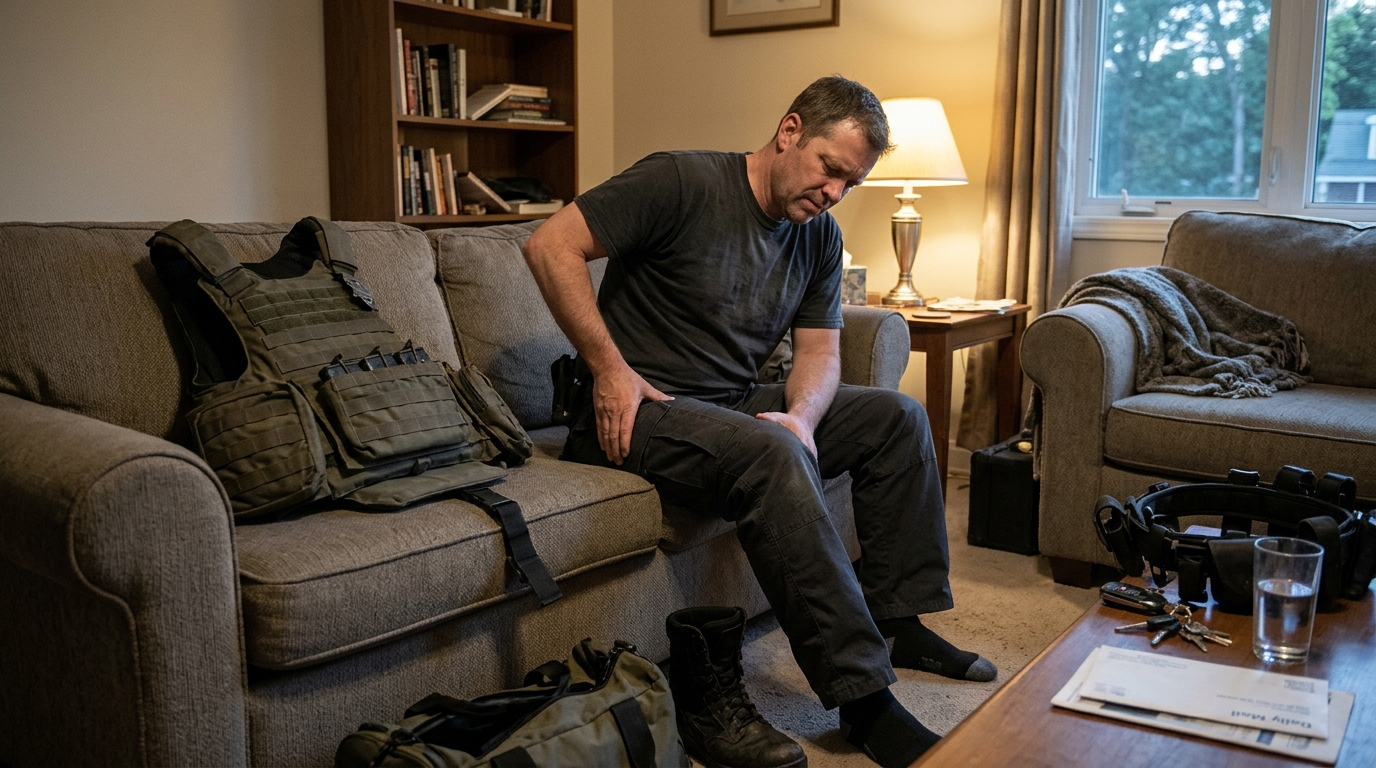
So, is meralgia paresthetica dangerous? On its own, usually not. It can’t paralyze your leg, since the nerve doesn’t control muscles. It can be really unpleasant, though, and it can steal sleep. The bigger question is making sure it’s actually this condition and not something that looks like it.
Conditions doctors want to rule out:
- Sciatica, where pain usually starts in the low back or buttock and travels down the back of the leg, sometimes to the foot
- An L2 or L3 nerve root problem in the lumbar spine, which can cause front thigh numbness plus weakness or reflex changes
- Hip joint disease, which tends to cause groin pain and stiffness when you rotate the hip
- Diabetic neuropathy, which usually begins as numbness in both feet and slowly creeps upward on both sides
The visit starts with the story: where the burning sits, what makes it worse, what changed recently. Then comes a hands-on exam. The doctor maps the numb patch with a light touch, presses near the front hip bone to see if that reproduces the tingling, and checks your strength and knee reflexes.
One simple meralgia paresthetica test used in clinics is pelvic compression. You lie on your good side while the doctor presses down on your pelvis for under a minute. If the burning eases, that points toward this nerve. It isn’t perfect, and no single bedside test is.
When the picture isn’t typical, testing helps. At Lone Star Neurology, we do nerve conduction studies and EMG in the office. Honestly, the thigh nerve is small and tricky to measure, so the study often aims to rule out a nerve root or broader neuropathy problem. If the lower back needs a look, MRI is available on Saturdays at our clinic, which helps people who can’t miss a weekday shift.
Treatment That Works for Most People
Here’s something many patients don’t expect to hear: this condition often gets better on its own. A Cochrane review found one observational study in which about two-thirds of patients improved without specific treatment. The same review also found no randomized trials comparing treatments, so the evidence for any one approach is limited.
In practice, meralgia paresthetica treatment starts with taking the pressure off the nerve. Looser pants. Wear a belt higher or switch to suspenders. Redistributing the weight on a duty belt. When weight is a factor, gradual weight loss with your primary care doctor’s guidance can help over time. These changes sound almost too simple. For many people, they’re enough.
Physical therapists sometimes add gentle meralgia paresthetica stretches for tight hip flexors, along with hip and core work. Any meralgia paresthetica exercises should feel easy and shouldn’t worsen the burning. If a stretch flares it up, stop and tell your doctor or therapist. Research on exercise for this condition is limited, so think of it as supportive care.
If the pain is persistent and affects sleep or work, doctors may consider medications used for nerve pain, such as certain anticonvulsants or antidepressants. They don’t fix the pressure, and they can cause side effects like drowsiness, dizziness, dry mouth, or weight gain, so the choice depends on your health history. Topical options are sometimes tried too.
Recovery time varies. Some people feel better within a few weeks of changing clothes. Others need several months.
Day-to-Day Changes That Help
Small habits make a real difference with this kind of meralgia paresthetica treatment, mostly because the nerve keeps getting irritated in the same spots every day. A few things patients find useful:
- Keep a simple note on your phone: when the burning shows up, what you were wearing, how long you’d been standing. Patterns pop out within a week or two.
- Break up long periods of standing. If you work a register or an assembly line, shifting your weight or sitting for a few minutes can help.
- Try a different meralgia paresthetica sleeping position. Many people do better lying on the unaffected side with a pillow between the knees, which keeps the sore hip from being pressed or tightly bent.
- Look at your gear. Wider belts spread pressure. Some officers and tradespeople switch to suspender systems.
- If your leg numbness comes and goes with position, notice which positions trigger it. That detail is gold during an exam.
Get checked sooner if you notice weakness, numbness spreading below the knee, pain shooting from your back, or changes in bladder or bowel control. Those point to something more serious and need prompt care.
Lone Star Neurology has 22 locations across the Dallas-Fort Worth area. If the burning on your thigh keeps coming back, you can call 214-619-1910 to schedule a visit.







Please, leave your review
Write a comment: