

A mini stroke, or transient ischemic attack (TIA), is a brief interruption of blood flow to part of the brain that causes stroke-like symptoms, such as a drooping face, a weak arm, or garbled speech, and then clears up, usually within minutes. It doesn’t leave obvious damage, but it warns that a full stroke may be close. Treat it as an emergency and call 911, even if the symptoms are already gone.
Picture it: your hand goes numb, you open your mouth to answer a question, and the words won’t come. Twenty minutes later you feel completely normal. It’s tempting to call it a strange spell and move on. Please don’t. In one well-known study, about 1 in 10 people seen in the ER for a TIA had a stroke within 90 days, and half of those strokes happened within two days. That’s why mini stroke symptoms that fade on their own still deserve the same urgency as ones that don’t.
What a TIA Is and Why the Symptoms Go Away
What is a mini stroke, physically? Brain cells need a constant supply of oxygen and glucose, delivered by blood. When a small clot or plaque buildup temporarily blocks an artery, the area it feeds stops working properly: you might lose control of a hand, part of your vision, or your ability to find words. Then the clot breaks up or shifts, blood flow returns, and the symptoms ease off.
That’s the key difference from a stroke. In a transient ischemic attack, blood returns before brain tissue dies, so there’s typically no lasting injury. In a stroke, it doesn’t, and the damage is permanent. The difference between a mini-stroke and a stroke isn’t always clear-cut, though. Some people whose symptoms disappeared still show small areas of injury on MRI.
Most episodes last only a few minutes, and nearly all resolve within an hour. But here’s the catch: while it’s happening, nobody can tell whether it’ll stop in 5 minutes or turn into a permanent stroke. Duration alone can’t separate the two, which is why the clock matters from the very first symptom.
A mini stroke is less an event than a signal. Something, whether a narrowed artery, a clot forming in the heart, or an irregular rhythm, made the blood supply fail once, and it can do it again. The NINDS calls it a warning sign, not a near miss.
The Symptoms to Recognize
Mini stroke symptoms look exactly like stroke symptoms, because the same thing is happening in the brain, only briefly. They come on suddenly, over seconds, not gradually over hours.
The easiest way to remember the signs of a mini stroke is the BE FAST check:
- B: balance. Sudden loss of balance or coordination.
- E: eyes. Sudden vision loss in one or both eyes, or double vision.
- F: face. Ask the person to smile. Does one side droop?
- A: arm. Ask them to raise both arms. Does one drift down?
- S: speech. Is it slurred, strange, or missing words?
- T: time. Call 911 right away and note when symptoms began.
Even one of these, appearing out of nowhere, is enough. The typical symptoms of a mini stroke include:
- Weakness or numbness on one side. An arm, a leg, or half the face suddenly feels heavy, clumsy, or “asleep.” Picking up a cup becomes hard.
- Speech trouble. Words come out slurred or jumbled, or not at all, even though the person knows exactly what they want to say. Sometimes it’s understanding others that suddenly fails.
- Vision changes. A curtain coming down over one eye, double vision, or losing half of what you see. Even a few seconds of this needs urgent attention.
- Mini stroke face droop. One side of the face sags and the smile turns lopsided. This is one of the most recognizable signs, especially paired with arm weakness or slurred speech.
- Balance problems. Sudden dizziness with poor coordination, staggering, or trouble walking straight.
What matters is the combination of sudden onset and a symptom on one side of the body. Don’t try to sort it out yourself.
Symptoms Women Report More Often
Women get the classic signs, face, arm, speech, just as men do. But research shows they’re also more likely to describe less typical symptoms, and those are easier to brush off. Fatigue, confusion, and nausea are among the complaints that can lead to a missed diagnosis.
Mini stroke symptoms in females may include:
- sudden, overwhelming fatigue that doesn’t match how active you’ve been
- confusion, trouble concentrating, or difficulty following a conversation
- nausea or vomiting, especially alongside dizziness or unsteadiness
- a general sense of weakness rather than a clearly weak arm or leg
- headache, or a change in behavior that family members notice first
The trouble is that these are easy to blame on migraine, anxiety, a long day, or menopause. Studies have also found that women with minor strokes or TIAs are somewhat less likely to be diagnosed correctly than men. So if mini stroke symptoms in females show up suddenly, especially together with even a hint of facial droop, arm weakness, or speech change, call 911 anyway. Being wrong costs a few hours in the ER. Being right and waiting can cost a lot more.
Women also carry some risks of their own: pregnancy and the weeks after delivery, migraine with aura, and estrogen-containing birth control in smokers.
What to Do in the First 48 Hours

The first two days after a TIA mini stroke are when the risk of a full stroke is highest. That’s the window when fast action makes the biggest difference.
1. Call 911 if symptoms are happening now. Don’t drive yourself, and don’t wait to see if it passes. Emergency teams can start stroke treatment on the way if needed.
2. Get seen the same day if symptoms have already stopped. Go to the ER, not to a routine appointment next week. TIA symptoms that resolved an hour ago still warrant evaluation today.
3. Write down the details. What happened, which side, how long it lasted, and what time it started.
4. Bring your medication list, especially blood thinners and blood pressure pills.
In the hospital, doctors weigh your age, blood pressure, diabetes, and the type and length of symptoms to estimate short-term risk. A scoring tool called ABCD² is often part of that, but no score alone can rule danger out.
Once a TIA is confirmed and bleeding is excluded, treatment usually starts right away. For many patients, that means antiplatelet medication, and for higher-risk TIAs, a short course of aspirin plus clopidogrel lowers the chance of a stroke over the next 90 days. Your doctor decides which approach fits you; don’t start anything on your own.
If symptoms have already passed and you’re not sure what to do next, our neurologists, including those at our Frisco office, can see you quickly for follow-up.
The Workup: Finding Out Where It Came From
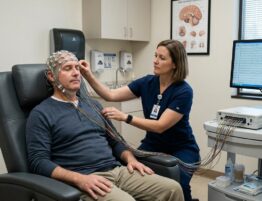
After a transient ischemic attack, the real question is why it happened. The answer shapes treatment, and treatment shapes the risk of a second episode.
- Brain imaging. CT or, ideally, MRI looks for stroke, bleeding, or other causes like a tumor. A normal scan doesn’t mean the TIA didn’t happen.
- Blood vessel imaging. Carotid ultrasound, CT angiography, or MR angiography checks the arteries in the neck and head for narrowing. A badly narrowed carotid artery may need surgery or stenting, ideally within two weeks.
- Heart tests. An ECG, an echocardiogram, and often longer heart-rhythm monitoring look for atrial fibrillation or a clot source in the heart. Atrial fibrillation can come and go, so a single short ECG may miss it.
- Blood work. Glucose, cholesterol, kidney function, and clotting tests, among others.
Many of these tests, including MRI and vascular ultrasound, are part of what we offer under tests and procedures. The results shape the plan: blood thinners if atrial fibrillation turns up, a procedure if there’s a severe blockage, and for most people, tight control of blood pressure, cholesterol and diabetes.
What Happens Next, and What the Outlook Really Is
It’s normal to wonder what a TIA means for the rest of your life. Life expectancy after a mini stroke depends mostly on what caused it, your age, and how well your risk factors are controlled. A TIA doesn’t automatically shorten your life or guarantee a stroke. But it does raise the odds, both in the first weeks and over the following years.
The encouraging part is how much fast care helps. In a large international registry, patients evaluated quickly at specialized units had a stroke rate of about 5% in the first year, much lower than older studies reported. Over five years, that risk rose to about 9.5%, and roughly half of those strokes happened after the first year. In other words, the danger doesn’t disappear once the first weeks pass; prevention is lifelong.
That prevention usually includes:
- antiplatelet drugs, or anticoagulants if the cause was a heart rhythm problem
- blood pressure kept on target
- cholesterol-lowering medication, often a statin
- good diabetes control
- no smoking
- regular physical activity, as your doctor advises, and a heart-healthy diet
Lifestyle changes support medication; they don’t replace it. Many of the risk factors for stroke are the same ones you can work on after a TIA, and there’s a clear plan for what to do after a mini stroke once you’re home.
Keep your follow-up visits, even when you feel fine. That’s where treatment gets checked and adjusted. And if new symptoms appear, call 911 again, even if the first episode was fully investigated.
A mini stroke that’s taken seriously is often the reason a bigger one never happens. A TIA, or mini stroke, isn’t minor. If you’ve had one, or think you might have, our stroke treatment team at Lone Star Neurology can help with evaluation and long-term prevention. Call 214-619-1910 or book an appointment online.
This article is for general education and doesn’t replace a consultation with a doctor. If you have stroke symptoms now, call 911.
 (No Ratings Yet)
 Loading...







I've given up... the stress her office staff has put me through is just not worth it. You can do so much better, please clean house, either change out your office staff, or find a way for them to be more efficient please. You have to do something. This is not how you want to run your practice. It leaves a very bad impression on your business.
Please, leave your review
Write a comment: