

Most eye twitching is harmless. A flickering lower or upper eyelid, usually in one eye, is almost always eyelid myokymia, a benign twitch set off by poor sleep, stress, caffeine, or dry eyes, and it fades on its own within days to a few weeks. A twitch that lasts longer, forces the eye shut, affects both eyes, or spreads down one side of the face is different. Those patterns can point to blepharospasm or hemifacial spasm, two neurological conditions that respond well to treatment once they’re recognized.
It’s a strange, annoying feeling. You’re reading an email, and your eyelid starts fluttering like it has its own heartbeat. Nobody else can see it (usually), but you can’t stop noticing it. The good news is that most people who come in worried about a twitch go home with reassurance, a few habit changes, and nothing more.
The Common Twitch: What Causes It
The ordinary twitch has a name: eyelid myokymia. It’s a series of tiny, rippling contractions in a few fibers of the orbicularis oculi, the ring of muscle that closes the eye. It typically hits one eyelid, comes in waves for seconds or minutes, then disappears and returns later that day or the next. It doesn’t hurt, and it never shuts the eye completely.
Most eye twitching causes are everyday things you can change:
- Too little sleep. A few short nights in a row is the single most common trigger we hear about.
- Stress. Deadlines, exams, a rough patch at home. The twitch often shows up right when you have the least patience for it.
- Caffeine. Coffee, strong tea, energy drinks, and pre-workout powders all increase nerve excitability.
- Alcohol, partly because it wrecks sleep quality and dehydrates you.
- Long screen sessions. People blink far less while staring at a monitor, and the eye surface dries out.
- Dry eyes from screens, contact lenses, air conditioning, allergies, or simply age.
- Eye strain from an outdated glasses prescription.
Magnesium gets mentioned a lot online. A deficiency can cause muscle twitches, but a twitchy eyelid on its own doesn’t prove you’re low, and supplements rarely fix ordinary myokymia.
Several eye twitching causes pile up at once – say, a stressful week, five hours of sleep, and a fourth coffee – and the eyelid is simply where it shows. Benign eyelid twitching like this is a symptom of an overtired system, not nerve damage.
How to Stop It
No button switches eye twitching off instantly. But when people ask how to stop eye twitching, the honest answer is: remove the triggers, and it usually settles within days.
What tends to help most:
- Sleep. Aim for seven to nine hours for at least a week. Even partial catch-up often makes a visible difference.
- Cut back on caffeine for two to three weeks, then reintroduce it slowly and see whether the twitch comes back.
- Treat dry eyes with preservative-free artificial tears a few times a day, more if you wear contacts.
- Follow the 20-20-20 rule at the screen: every 20 minutes, look at something about 20 feet away for 20 seconds, and remember to blink.
- Try a warm compress: hold a clean washcloth over your closed eye for a few minutes to relax the lid.
- Get your vision checked if it’s been a while; squinting through an old prescription keeps the muscles busy.
- Take a real break from stress when you can, even a walk without your phone.
Recognizing what causes your eye twitching is half the work. Some people keep a simple log for a week and discover the twitch only appears after late nights or on heavy-coffee days.
If eyelid twitching hasn’t improved after a few weeks of these changes, it’s time to have it looked at. Our neurologists, including the team at our Garland office, can tell a benign twitch from something that needs treatment.
When a Twitch Has Gone On Too Long
Lasting eye twitching for days isn’t unusual and isn’t usually a problem. Lasting weeks, or changing character, is different. Here’s what makes a neurologist want to take a closer look:
- Duration. A twitch that hasn’t settled after two to three weeks, despite better sleep and less caffeine.
- Spread. Contractions that move from the eyelid to the cheek, the side of the nose, or the corner of the mouth. That’s beyond typical myokymia.
- Forced eye closure. A spasm strong enough to shut the eye, or blinking so frequent it interferes with reading or driving. This is a classic sign of blepharospasm.
- Both eyes involved, especially if the blinking gets worse in bright light.
- One side of the face pulling during sleep, as a partner might notice. That points toward hemifacial spasm.
- Other eye changes: a drooping eyelid, redness, swelling, discharge, or a vision change.
One warning stands apart from all of these. Sudden weakness or drooping on one side of the face, especially with slurred speech, arm weakness, vision loss, or trouble with balance, is not a twitch at all. It can be a stroke. Call 911.
Blepharospasm: When Both Eyes Close Against Your Will

Benign essential blepharospasm is a focal dystonia, a movement disorder in which the brain sends faulty signals to a single group of muscles, in this case the muscles around both eyes. It usually begins in people in their 50s or 60s, more often in women, and it isn’t caused by anything in the eye itself. It belongs to the wider family of focal dystonia conditions, which also includes writer’s cramp and cervical dystonia.
It often starts gently: more blinking than usual, eyes that feel irritated or sensitive to light. Over months, the blinking can turn into hard squeezing, and in some people the eyelids clamp shut for seconds at a time. Some patients become functionally blind during an episode even though their eyes are perfectly healthy. Bright light, wind, stress, and fatigue make it worse. Oddly, many people find small tricks that briefly help, like humming, talking, or touching the side of the eye.
The standard treatment is botulinum toxin injected in tiny amounts into the muscles around the eyes. It calms the overactive contractions, and an American Academy of Neurology guideline rates it as an established, effective treatment for blepharospasm. The effect builds over a few days and typically lasts about three months, so you repeat injections on a schedule. Side effects are usually mild and temporary: a slightly droopy lid, dry eye, or tearing for a week or two. The injections themselves take only a few minutes and are part of our in-office tests and procedures.
Hemifacial Spasm: One Side of the Face, Not Just the Eye
Hemifacial spasm can start as an eye twitch and then keep going. Muscles on one side of the face contract involuntarily, starting around the eye and gradually pulling in the cheek, nose, and corner of the mouth.
Typical hemifacial spasm symptoms include:
- twitching that begins in one lower eyelid and slowly spreads down the same side of the face
- the eye on that side narrowing or closing while the mouth pulls sideways
- spasms that continue during sleep, which a bed partner may notice before you do
- episodes that get worse with stress, fatigue, or talking
- in some people, a clicking sound in the ear on the same side
In most cases, the cause is mechanical. A small blood vessel presses on the facial nerve where it leaves the brainstem, and that constant contact irritates the nerve until it fires on its own. Less often, it follows Bell’s palsy or another facial nerve injury, so if you’ve had Bell’s palsy before, mention it. Rarely, a tumor or other growth is responsible, which is why an MRI of the brain is part of the standard workup.
Hemifacial spasm treatment usually starts with botulinum toxin injections, which reduce the spasms for about three months at a time and work well for most patients. For people with clear vascular compression on MRI who don’t want lifelong injections, a neurosurgeon can perform microvascular decompression. This operation places a small cushion between the vessel and the nerve. It carries real surgical risks, including hearing loss, but it’s the only option that can resolve the spasm long-term. The choice depends on your age, overall health, and how much the spasms affect your life.
Getting the Right Diagnosis in Dallas-Fort Worth
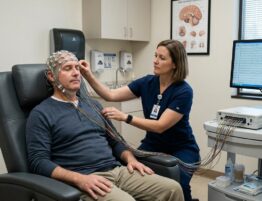
Telling these conditions apart mostly comes down to the pattern, and a careful exam usually sorts it out. A neurologist will ask when it started, how often it happens, which side, what makes it better or worse, whether it continues during sleep, and what medications you take. A short phone video of an episode can be surprisingly useful.
| | Eyelid myokymia | Blepharospasm | Hemifacial spasm |
| :—: | :—: | :—: | :—: |
| Where | One eyelid | Both eyes | One whole side of the face |
| What it looks like | Fine flicker, eye stays open | Frequent blinking, forced closing | Eye closing plus cheek and mouth pulling |
| During sleep | Stops | Stops | Often continues |
| Usual cause | Fatigue, stress, caffeine, dry eyes | Focal dystonia in the brain | Blood vessel pressing on the facial nerve |
| Usual treatment | Habit changes | Botulinum toxin | Botulinum toxin or surgery |
If facial twitching spreads beyond the eyelid or interferes with seeing, reading, or driving, it deserves an evaluation. Our movement disorders program treats both blepharospasm and hemifacial spasm, including botulinum toxin injections.
People ask us “why is my eye twitching?” all the time, and for most of them the answer is reassuringly boring: sleep, stress, and coffee. When it isn’t, an accurate diagnosis makes a real difference. If your eye twitching won’t quit, changes character, or involves more than one eyelid, call Lone Star Neurology at 214-619-1910 or book an appointment online.
This article is for general education and doesn’t replace a consultation with a doctor. Sudden facial weakness or drooping with speech, vision, or balance problems is an emergency; call 911.
 (No Ratings Yet)
 Loading...







I've given up... the stress her office staff has put me through is just not worth it. You can do so much better, please clean house, either change out your office staff, or find a way for them to be more efficient please. You have to do something. This is not how you want to run your practice. It leaves a very bad impression on your business.
Please, leave your review
Write a comment: