

If you sleep a full seven to nine hours and still fight to stay awake at your desk, in class, or behind the wheel, the problem may not be your habits. Narcolepsy and idiopathic hypersomnia are neurological sleep disorders in which the brain can’t hold a steady state of wakefulness, and both need a medical diagnosis, not another lecture about going to bed earlier. Untreated, they quietly wreck grades, careers, and sometimes driving records.
Most people we see have heard “just get more sleep” for years. Some fell asleep mid-meal or mid-conversation and laughed it off. Others were told it was stress, depression, or a lazy streak. None of that is fair, and none of it explains the symptoms of narcolepsy that show up when you look closely.
What Narcolepsy Is and Why It Happens
What is narcolepsy, in plain terms? It’s a chronic neurological disorder in which the switches between sleep and wakefulness don’t stay where they should. Pieces of sleep, especially REM sleep, the dreaming stage, push into the day without warning, even when the person is trying hard to stay active.
In type 1 narcolepsy, the brain has lost most of the cells that make hypocretin, also called orexin, a chemical that keeps you alert. The best evidence points to an autoimmune process: the immune system attacks those cells by mistake, probably in people with a certain genetic makeup (most carry the HLA-DQB1*06:02 gene variant) after some trigger such as an infection. Somewhere between 135,000 and 200,000 Americans are thought to live with the condition, many of them undiagnosed.
So what causes narcolepsy in everyone else? Honestly, we still don’t fully know the cause of type 2. Hypocretin levels are usually normal, and researchers are still studying the mechanism.
Symptoms often start in the teens or early twenties, right when school and first jobs demand the most. That timing helps explain why the diagnosis often takes years. People blame the sleepiness on late nights, stress, or a demanding schedule, and they often don’t come in until their grades or work have slipped badly.
The Five Symptoms Worth Recognizing
Narcolepsy symptoms vary a lot from person to person, and very few people have all five. Daytime sleepiness is nearly universal; the rest come and go.
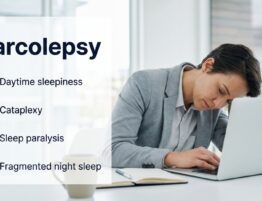
- Excessive daytime sleepiness. A heavy, constant pull toward sleep, with sudden “sleep attacks” in the middle of something. A 15-minute nap can leave someone refreshed for a while, which is a useful clue, but the sleepiness creeps back.
- Cataplexy. Brief muscle weakness set off by strong emotion, usually laughter, but also surprise or anger. The jaw drops, the head nods, the knees buckle. The person stays fully awake and aware the whole time, which is how it differs from fainting or a seizure.
- Sleep paralysis. Being unable to move or speak for seconds to a couple of minutes while falling asleep or waking up. It’s frightening but harmless, and the causes of sleep paralysis trace back to the same REM sleep machinery.
- Hallucinations at sleep onset or on waking. Vivid images, sounds, or the sense that someone is in the room.
- Broken night sleep. Waking many times, often for no obvious reason, despite being exhausted all day.
If several of these symptoms of narcolepsy keep recurring, a sleep evaluation is the next step. That’s especially true for anything resembling cataplexy, which almost nothing else causes.
Type 1, Type 2 and Idiopathic Hypersomnia
Not every disorder of excessive sleepiness is the same disease, and the label matters. It shapes treatment, what we expect over time, and what insurance will cover.
| | Narcolepsy type 1 | Narcolepsy type 2 | Idiopathic hypersomnia |
| :—: | :—: | :—: | :—: |
| Cataplexy | Yes, or low hypocretin on testing | No | No |
| Hypocretin | Low | Usually normal | Normal |
| Naps | Short naps help, briefly | Short naps help, briefly | Long naps, rarely refreshing |
| Night sleep | Fragmented | Often fragmented | Long, deep, very hard to wake from |
| REM sleep intruding into the day | Typical | Typical | Not typical |
Narcolepsy type 2 looks like type 1 on a sleep study but comes without cataplexy, and hypocretin is usually normal. Idiopathic hypersomnia is a separate chronic sleep disorder. People with it may sleep 10 hours or more and still wake up groggy and disoriented, a state called sleep inertia or “sleep drunkenness,” and naps rarely help.
The signs of narcolepsy and hypersomnia overlap enough that symptoms alone can’t separate them. Testing does that.
How It Is Diagnosed: The Overnight Study and the Nap Test
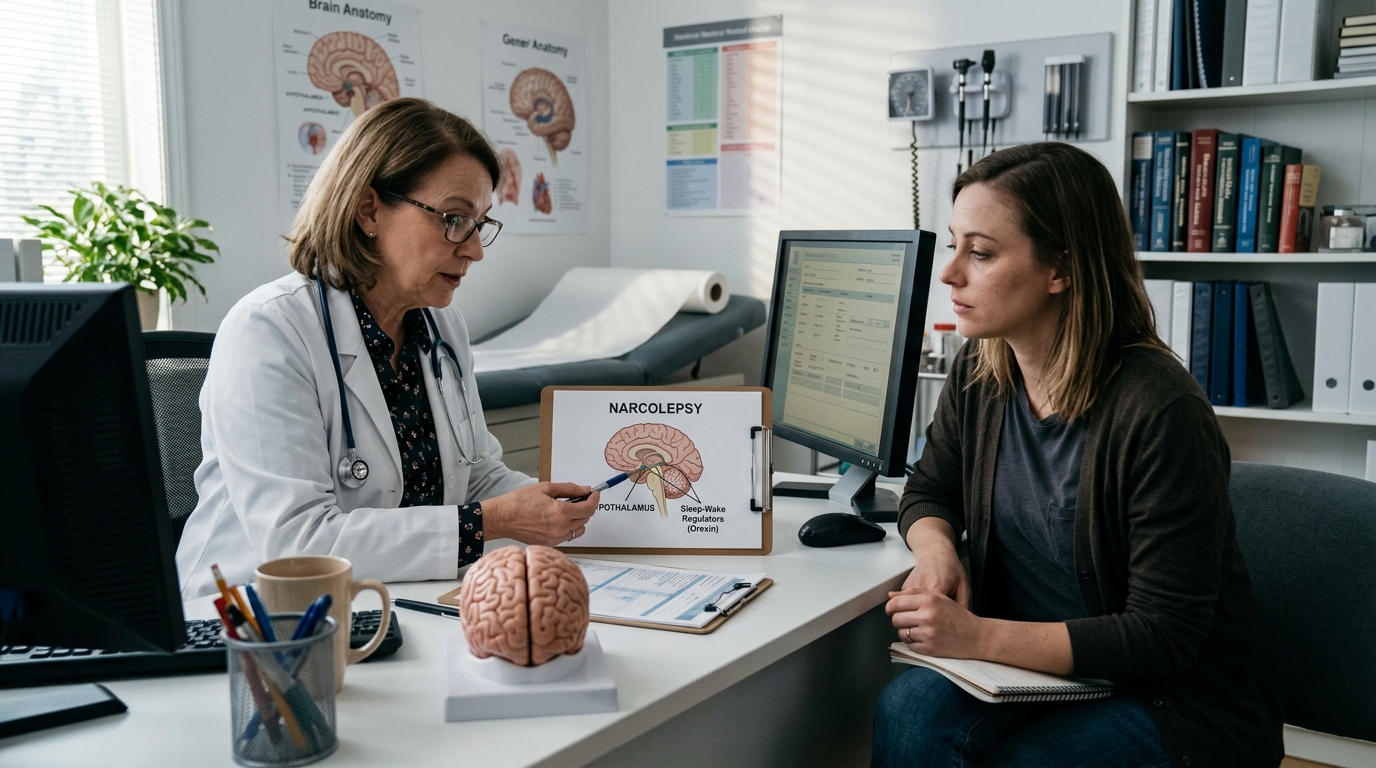
Diagnosis starts with a conversation: your sleep schedule, how long this has been going on, other conditions, and every medication you take. Many doctors use the Epworth Sleepiness Scale, eight quick questions about how likely you are to doze off while reading, watching TV, sitting in traffic, or riding as a passenger. A score above 10 suggests excessive sleepiness, but the scale measures severity; it doesn’t name the cause.
The formal workup usually follows this order:
1. Sleep diary or a wrist activity tracker for one to two weeks beforehand. Too little sleep or an irregular schedule can mimic narcolepsy symptoms, so we need to rule that out first.
2. Medication review. Antidepressants, stimulants, and some sleep aids can skew the results, and your doctor may ask you to taper certain drugs safely before testing. Never stop anything on your own.
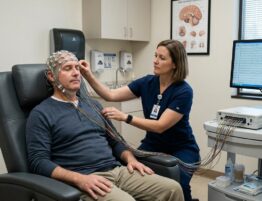
3. Overnight polysomnography. Sensors track brain waves, breathing, oxygen, and leg movements, mainly to rule out sleep apnea and other causes of poor sleep.
4. Multiple Sleep Latency Test (MSLT) the next day. You get five chances to nap, about two hours apart. Falling asleep in 8 minutes or less on average, with REM sleep showing up early in at least two naps, points to narcolepsy.
Results are always read alongside your history, the same way the diagnosis of sleep disorders works in general, and our sleep disorder center runs both tests.
Treatment: What Actually Helps
There’s no cure for narcolepsy yet, but narcolepsy treatment works well for most people. The aim is fewer sleep attacks, less cataplexy, and better nights, using a mix of habits and medication fitted to each person’s worst symptoms.
Habits come first, though they rarely do the job alone:
- Keep the same bedtime and wake time every day, weekends included.
- Plan one or two short naps, 15 to 20 minutes, at predictable times.
- Use caffeine sensibly if it helps, but don’t rely on it in place of prescribed treatment, and skip it late in the day.
- Go easy on alcohol and heavy meals, both of which deepen daytime sleepiness.
When it comes to narcolepsy medication, doctors choose by symptom:
- For sleepiness: wake-promoting drugs such as modafinil, armodafinil, solriamfetol, or pitolisant, and sometimes stimulants like methylphenidate.
- For cataplexy and broken nights: oxybate medications, taken at bedtime, which can also improve daytime alertness. Pitolisant and certain antidepressants help too.
- For idiopathic hypersomnia: some of the same wake-promoting drugs are used, and a low-sodium oxybate became the first FDA-approved treatment for the condition in 2021.
Choosing among them depends on side effects, other health conditions, pregnancy plans and, frankly, insurance coverage. It often takes a few adjustments to land on the right narcolepsy treatment, so plan on follow-up visits rather than a one-and-done prescription.
Living With It, and When to Ask for a Sleep Evaluation
A diagnosis of narcolepsy often brings relief, because it finally explains years of being called lazy. Day-to-day life still takes some adjusting. Under the Americans with Disabilities Act, employers are expected to consider reasonable accommodations, such as scheduled nap breaks, flexible start times, or work that doesn’t involve operating heavy machinery. Students can ask their school’s disability office for extra breaks, recorded lectures, or extended time on exams, usually with a note from the treating physician.
Driving deserves real caution. Fall asleep at the wheel once, and the consequences can be permanent. In Texas, the state Medical Advisory Board reviews medical conditions that affect safe driving, and your neurologist can help you understand where you stand. Until narcolepsy is controlled, it’s safest to let someone else drive.
Ask for a sleep evaluation if you:
- fall asleep without meaning to, at work, in class, or during conversations
- feel sleepy most days despite seven or more hours in bed
- go weak in the knees or jaw when you laugh
- wake up unable to move, or see things as you drift off
- have been sleepy for months and nobody has found a reason
Lone Star Neurology evaluates sleepiness across Dallas-Fort Worth, including our Dallas office. If narcolepsy symptoms are getting in the way of work, school, or driving, call 214-619-1910 or book an appointment online. The right narcolepsy treatment won’t just make you less tired; for many people, it gives back the hours of the day they’d stopped counting on.
This article is for general education and doesn’t replace a consultation with a doctor. Never start, stop, or change a medication without talking to the clinician who prescribed it.
 (No Ratings Yet)
 Loading...






I've given up... the stress her office staff has put me through is just not worth it. You can do so much better, please clean house, either change out your office staff, or find a way for them to be more efficient please. You have to do something. This is not how you want to run your practice. It leaves a very bad impression on your business.
Please, leave your review
Write a comment: