
Most people notice memory changes at some point and quietly wonder what they mean. A name that won’t come. A word that disappears mid-sentence. Walking into a room and having no idea why. These moments are unsettling, and the question underneath all of them is the same: is this normal, or is something actually wrong?
The answer depends less on forgetting itself and more on the pattern. Memory loss causes are wide-ranging, and a single forgotten name doesn’t tell you much on its own. What matters is the nature of the forgetting, how often it happens, whether it’s getting worse, and whether it’s starting to interfere with daily life. Understanding that difference is the starting point for knowing when to accept slower memory and when to get it checked.
What Counts as Normal Age-Related Memory Loss
The brain changes with age, and memory changes too. Retrieval slows down. Holding multiple things in mind at once becomes harder. Names and words take longer to surface, especially when you’re tired or distracted.
What is short-term memory loss in the context of normal aging? It’s the experience of having difficulty retaining new information for short periods: an address heard once, instructions given quickly, a phone number you haven’t written down. This kind of forgetting happens more easily as people get older, particularly when attention is divided. But in healthy aging, the information is usually still accessible. It just takes a little longer to surface.
Long-term memory loss in the true sense, where established memories from earlier in life begin to fade or disappear, is not a normal part of aging. Well-encoded memories from years past tend to remain relatively stable even as processing speed slows. A person may forget the exact date of an event but still clearly remember the event itself. That distinction matters.
Normal age-related changes tend to develop gradually, remain stable over time, and don’t meaningfully disrupt independence. The person can still manage finances, cook meals, take medications on schedule, navigate familiar places, and carry on conversations without significant difficulty. What is short-term memory loss that’s worth monitoring? When it starts affecting those functions rather than just slowing them.
Everyday Forgetfulness vs. Red Flags
Not every episode of short-term memory loss signals a problem. Healthy people of all ages forget things. The difference between ordinary forgetfulness and something clinically meaningful lies in pattern, frequency, and impact. Understanding short-term memory loss in context helps you decide when to simply note what’s happening and when to act.
A few categories that help sort this out:
- Occasional forgetting vs. consistent gaps. Momentarily forgetting a word or a name and then recalling it later is typical. Regularly forgetting recent conversations, repeatedly losing track of whether you’ve taken medication, or consistently being unable to remember events from the same day is a different matter.
- Short-term memory loss causes. Getting lost in a neighborhood you know well, asking the same question multiple times in one conversation without awareness of having asked before, or being unable to follow a familiar routine without prompting.
- Repetition. When a person keeps returning to the same question or story within a single conversation, that pattern is one of the most consistent early indicators that memory evaluation is appropriate. One occurrence isn’t meaningful; a recurring pattern is.
- Orientation problems. Difficulty keeping track of dates, days of the week, or the sequence of recent events is worth noting. Occasional confusion under stress is common. Regular disorientation in familiar contexts is not.
The goal isn’t to alarm anyone into seeing a doctor over a forgotten grocery item. It’s to help people distinguish the friction of a normal aging brain from the kind of progressive change that deserves investigation.
Common Causes of Memory Problems
Causes of memory loss include a wide range of possibilities, and many are reversible once identified. This is one of the main reasons that proper evaluation matters: not every memory problem is the beginning of dementia.
- Medications. Both prescription and over-the-counter drugs can affect concentration, attention, and the ability to form or retrieve memories. Antihistamines, sleep aids, anti-anxiety medications, and certain blood pressure drugs are among the common culprits. If memory changes began around the time a medication was introduced or changed, that’s worth mentioning to your doctor. Don’t stop the medication on your own, but do flag the timing.
- Thyroid dysfunction. An underactive thyroid can produce fatigue, cognitive slowing, and difficulty concentrating that closely resembles memory impairment. Because thyroid problems are easily identified through routine bloodwork and are highly treatable, this is typically one of the first things evaluated when unexplained memory changes appear.
- Nutritional deficiencies. Vitamin B12 deficiency in particular can affect nerve function and produce symptoms that include memory problems, mental fog, and slowed thinking. This is especially relevant in older adults, who absorb B12 less efficiently from food. A blood test can identify a deficiency, and supplementation often improves symptoms.
- Vascular and neurological conditions. Causes of memory loss also include changes in blood flow to the brain, whether from a stroke, transient ischemic attack, or the gradual effects of small vessel disease. Neurodegenerative processes, brain injury, and other structural changes also fall into this category. These require a more comprehensive evaluation that goes beyond basic bloodwork.
Short-term memory loss causes that appear suddenly or develop rapidly needs prompt attention. A sudden, significant change in cognitive function is not typical aging and should be evaluated without delay.
When Stress, Sleep, and Mood Affect Memory

Memory doesn’t operate independently of the rest of how a person is doing. Emotional state, sleep quality, and stress levels all directly affect how well the brain encodes, processes, and retrieves information.
Can stress cause memory loss? Yes, in a meaningful way. Prolonged or intense stress activates the body’s stress response in ways that interfere with concentration and the formation of new memories. Someone under significant ongoing stress may find themselves reading the same paragraph multiple times without retaining it, or forgetting information they just received. The stress itself isn’t causing brain damage, but it’s occupying cognitive bandwidth that would otherwise support memory function.
- Sleep. Poor or fragmented sleep is one of the most underappreciated contributors to memory complaints. The brain consolidates memories during sleep, moving information from short-term to longer-term storage. When sleep is consistently insufficient or disrupted, that consolidation process is impaired. A person who has slept poorly for weeks will often notice measurable effects on memory, attention, and processing speed.
- Anxiety. Persistent worry draws attention back to the source of anxiety repeatedly. That redirection of attentional resources leaves less cognitive capacity for encoding everyday information, which can create a subjective experience of forgetfulness even when no underlying memory disorder is present.
Can depression cause memory loss? It can produce symptoms that closely resemble memory impairment. Depression slows processing speed, reduces motivation, and disrupts concentration, all of which affect how information is taken in and retained. For some people, treating depression significantly improves cognitive complaints that were initially attributed to memory decline. This is why mood history is always part of a proper memory evaluation.
How Memory Loss Is Evaluated and Tested
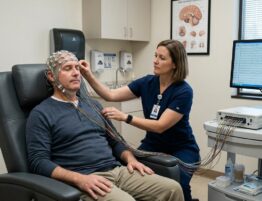
A memory loss test is not a single standardized exam. A proper evaluation of memory concerns is a process that begins with a detailed conversation rather than a test form.
The neurologist will ask about when changes were first noticed, whether they’ve been gradual or sudden, what functions have been affected, and whether a family member has noticed anything. That contextual history is as diagnostically important as any cognitive test.
Short-term memory loss test in clinical practice refers to standardized cognitive screening tools that assess memory, attention, orientation, language, and other mental functions across multiple domains. These screens help determine whether the pattern of any difficulties fits a particular diagnostic picture and whether more comprehensive neuropsychological testing is warranted. A screen alone doesn’t make a diagnosis. It helps determine the next step.
Laboratory evaluation typically includes thyroid function, vitamin B12 levels, complete blood count, and metabolic markers. Depending on the clinical picture, providers may add additional tests.
Brain imaging, usually MRI, may be recommended when structural causes of memory change need to be evaluated or ruled out. MRI can identify the effects of prior strokes, areas of atrophy, changes related to small vessel disease, or other abnormalities that help explain a patient’s symptoms.
A short-term memory loss test combined with this workup allows the neurologist to distinguish between aging, reversible causes, and conditions that require ongoing monitoring or specific treatment. The evaluation is not a one-time event. Follow-up appointments track whether symptoms have stabilized, improved, or progressed, which itself provides diagnostic information.
When to See a Neurologist at Lone Star Neurology
Not every memory concern requires a specialist, but some patterns clearly do. If memory problems are becoming more frequent, measurably worsening over months, or starting to affect your ability to manage finances, medications, cooking, driving, or work, that’s the point to seek a proper evaluation.
What causes short-term memory loss that progresses this way? The answer requires clinical assessment, not a list of possibilities. A neurologist considers the full picture: age, medical history, medications, sleep, mood, the specific nature of what’s being forgotten, and whether the pattern fits a recognizable clinical presentation.
At Lone Star Neurology, the evaluation process is built around your actual symptoms. We identify reversible causes of memory loss and treat them directly. When the picture points toward something more complex, we move through the diagnostic process methodically and keep you informed at every step.
Short-term memory loss causes are worth investigating when they’re affecting how you live. Same-week appointments are available across 17 DFW-area locations.
Memory isn’t something to wait out. If the pattern described in this article sounds familiar, whether it’s happening to you or someone you care about, don’t put the consultation off until it becomes undeniable. Getting evaluated early gives you the most options, and often the most peace of mind. Some causes of memory change are treatable. Some are manageable with the right plan. None of them get easier to address with time.
Call 214-619-1910 or schedule online to book a consultation with a specialist. Same-week appointments are available at 17 DFW-area locations.
Disclaimer: The information in this article is for educational purposes only and does not constitute medical advice. Please consult a qualified healthcare provider from Lone Star Neurology for evaluation and diagnosis of any cognitive symptoms.