

Witnessing a seizure can be deeply alarming. Watching a friend, family member, or coworker suddenly lose control of their body naturally triggers fear and urgency. However, staying calm and taking the right steps makes a profound difference in keeping the person safe during an episode. Understanding the subtle signs that precede a seizure helps you…
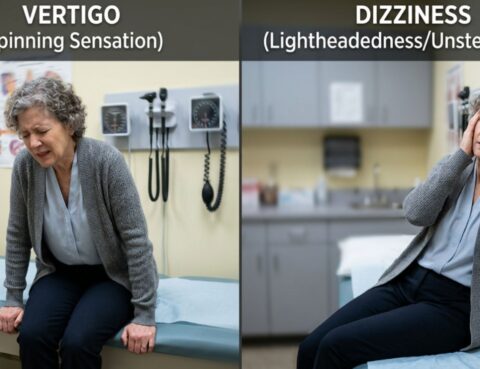
Feeling unsteady on your feet or sensing that the world around you is moving can be deeply disorienting. Many patients use the words “dizzy” and “vertigo” interchangeably to describe these uncomfortable sensations. However, in the medical world, they refer to distinctly different experiences that point to different underlying causes in the body. Understanding the subtle…

Your head is pounding. The light from your phone screen feels like a physical assault. You’re not looking for a thorough explanation of neurobiology right now. You want to know how to get rid of a migraine, and you want to know it fast. Here’s the honest answer: most attacks respond well to a combination…

Tingling. Burning. A numbness that won’t go away, even though nothing’s touching your skin. Sound familiar? You’re not imagining it, and you’re not alone. This is neuropathy in the feet and legs: the nerves that carry signals between your brain and your lower body have taken damage, and they’re not doing their job the way…

Almost everyone has experienced that dull, aching pressure across the forehead or around the back of the head after a long, demanding day. When asked what a tension headache is, the simplest definition is that it is the most common form of primary headache, affecting millions of adults across the United States. Unlike migraines or…

Big life changes stir up a strange mix of excitement and dread, sometimes both at once. Finishing school, moving to a new city, hunting for a job – all of it puts real strain on the nervous system, and the body doesn’t always process that gracefully. One of the most common physical results is a…

Summer by the water is supposed to feel carefree. Unfortunately, it’s also the season when neurologists see some of the worst spinal injuries of the year, most of them tied to a single bad dive. There’s a stubborn myth that serious injury only happens from high dives, but that’s not true. A dive into water…

Some brain conditions develop slowly enough that a person barely notices. Others build over days or weeks and change everything about how someone thinks, feels, and behaves in that short window. Autoimmune encephalitis falls into the second category, and because its early symptoms so often look psychiatric rather than neurological, it’s frequently missed or misdiagnosed…

Neuropathy affects a lot of people, but the hereditary kind is a different animal. It’s a group of genetic conditions that gradually wear down the peripheral nerves, and the transmission of nerve signals slowly breaks down over time. The best-known form by far is Charcot-Marie-Tooth disease, usually just called CMT. Because it runs in families,…

Summer nights have a reputation for being relaxed – open windows, late dinners, an easy pace. For a lot of people, though, the reality looks different: tossing and turning, waking up at 3 am drenched in sweat, and dragging through the next day on fumes. Summer sleep problems can feel like a minor seasonal annoyance….