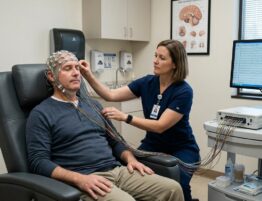

Many people who get an electromyography appointment take the term far more seriously than it needs to be. The name can sound intimidating, but it doesn’t carry any real threat. Doctors often use an EMG and nerve conduction study together to understand how well nerves and muscles are working, and they reach for this combination when a patient has pain, numbness, tingling, or weakness. Knowing what actually happens during the visit makes the whole thing feel far less unsettling.
A doctor may order these tests when symptoms could involve the nerves, the muscles, or the signal transmission between them. The results help pinpoint the source of the problem and shape what treatment might make sense next. The nerve conduction test measures how quickly and efficiently an electrical signal travels through a nerve.
This article is for general information only and isn’t a substitute for a medical diagnosis. If your symptoms worry you, the safest next step is talking to a doctor.
What an EMG and Nerve Conduction Test Actually Do
Many patients want to know what a nerve conduction test is. The study shows how electrical signals travel through peripheral nerves, while EMG assesses the electrical activity of the muscles. That’s why doctors often order them together for unexplained weakness, pain, numbness, or tingling.
- Signal. During a nerve conduction study, small electrodes are placed on the skin. A short electrical impulse travels through the nerve, and the equipment records the response’s speed and strength.
- Activity. Electromyography uses a thin needle electrode inserted into a specific muscle to record its electrical activity at rest and during contraction.
- Damage. Many patients ask what an EMG test is for. The exam helps detect signs of peripheral nerve disorders, including signal-transmission problems, and helps determine whether symptoms trace back to the muscle or the nerve.
- Localization. The results can tell the doctor exactly where the problem is, which is especially useful when symptoms have several possible causes.
- Diagnostics. A nerve conduction study helps interpret the broader picture, though the test alone doesn’t always establish a final diagnosis without other data factored in.
Step by Step: What Happens During Your Test
Before the exam, most patients want to know exactly what to expect. A nerve conduction test usually comes first, and an EMG may follow in the same visit. Duration depends on how many nerves and muscles need testing. Patients who need this kind of testing can reach out to our providers and come in for the study in cities like Denton and beyond:
- Review. The specialist first asks about symptoms, how long they’ve lasted, and where they’re located, which helps determine what areas need investigating.
- Electrodes. A nerve conduction test involves placing electrodes on the skin’s surface. They register the nerve’s reaction and deliver short, controlled pulses through other electrodes.
- Response. The device measures how quickly and strongly the nerve responds to stimulation. Patients may feel a brief tingling or muscle twitch, but each impulse lasts only a moment.
- EMG. If the second part of the exam is needed, the doctor inserts a fine needle electrode into selected muscles. Patients relax the muscle, then gradually contract it so the doctor can record different types of electrical activity.
A common question is how long an EMG test takes. It depends on the scope of the study, and in most cases the entire visit takes up to an hour.
Does an EMG Hurt? Managing Discomfort
Once a doctor orders an electromyography, many patients wonder whether it will hurt. Questions like “Is an EMG test painful?” usually come from how intimidating the name sounds. A thin needle electrode is used during EMG, and the exam can be uncomfortable, but for most people the discomfort is brief and manageable:
- Feeling. As the electrode goes in, patients typically feel a short prick, similar to a routine injection. The sensation may increase slightly as the muscle contracts, but the doctor works only on the areas that actually need testing.
- Stimulation. During the nerve conduction portion, short electrical impulses cause a tingling feeling or a quick muscle twitch, though each stimulus is brief.
- Relaxation. Patients are encouraged not to tense up unnecessarily. EMG test painful experiences aren’t universal, and the more relaxed a patient stays, the easier it is for the specialist to get an accurate reading.
- Communication. If something feels off, tell the doctor right away.
- Afterward. Describing the exam as simply an EMG test is painful isn’t quite accurate. You may have mild sensitivity where the needle went in, but the discomfort is usually short-lived rather than severe.
Understanding Your EMG and Nerve Test Results

Once the exam wraps up, patients want to understand what the numbers and graphs mean. We evaluate EMG nerve conduction study results alongside symptoms, the physical exam, and medical history. One unusual reading on its own doesn’t automatically point to a specific disease. Patients sometimes ask how to fail a nerve conduction test, but the honest answer is that the test is designed to reflect how the nerves actually function, and deliberately skewing the results only makes an accurate diagnosis harder to reach:
- Normal. A normal result means the nerves and muscles tested showed expected electrical activity and signal transmission, helping rule out certain neuromuscular disorders, though not every possible cause of the symptoms.
- Abnormal. Unusual readings can point to nerve dysfunction, damage, or a muscle problem, narrowing down where the issue sits and what it looks like.
- Legs. A leg EMG may be ordered for weakness, numbness, tingling, or pain in the lower extremities, helping evaluate the relevant nerves and muscles for clues about where symptoms originate.
- Diagnosis. If results fall outside the normal range, that doesn’t automatically confirm a specific diagnosis. The specialist compares the data against exam findings and, if needed, orders additional testing.
How to Prepare and What It Costs
Preparing for an EMG and nerve conduction study is usually straightforward, though a few small details can affect comfort and recording quality. Exact instructions vary by clinic, so it’s worth checking directly with the office beforehand:
- Cost. There’s no single answer to EMG test cost. The price depends on the country, the clinic, how many nerves and muscles get examined, insurance coverage, and the overall scope of the procedure. Patients can ask the clinic ahead of time for an estimate.
- Skin. On the day of the test, patients avoid applying creams, lotions, or oils to the areas being tested, since clean, dry skin helps the electrodes make good contact.
- Clothing. Comfortable clothing that allows easy access to the arm, leg, or other area under examination makes the visit smoother.
- Medications. A nerve conduction study is often ordered to clarify specific symptoms, so patients should tell their doctor about all medications and supplements they’re taking.
- Devices. Anyone with a pacemaker or other implanted electronic device should mention it beforehand.
According to the American Association of Neuromuscular & Electrodiagnostic Medicine, electrodiagnostic testing, which includes nerve conduction studies and needle EMG, helps determine whether nerves and muscles are working properly and guides the doctor toward appropriate treatment. MedlinePlus notes these tests are commonly used to investigate numbness, tingling, muscle weakness, and pain, with results always interpreted alongside a physical exam.
When to See a Neurologist at Lone Star Neurology
A nerve conduction study and EMG aren’t ordered for a passing ache. They’re especially useful when a doctor wants to determine whether symptoms trace back to peripheral nerves or to muscle function itself. Lone Star Neurology can help evaluate neurological symptoms and figure out whether an EMG or nerve conduction study makes sense for a given case, since a nerve conduction test is often just one part of a broader diagnostic process, and a routine physical exam usually isn’t enough on its own.
A few situations worth flagging for evaluation:
- Persistent or recurring numbness in the arms or legs is a reasonable reason for a neurological evaluation, and it can overlap with broader nerve damage from ongoing conditions.
- Unexplained muscle weakness, especially if it persists or gets worse, deserves a specialist’s attention.
- Persistent tingling, burning, or unusual sensations can have a wide range of causes, some of which show up clearly on this kind of testing.
- If weakness, numbness, or sensation changes are involved, a doctor may consider nerve testing to narrow down the cause, and they’ll usually discuss the range of diagnostic tools available at that point, too.
You’re welcome to find a Lone Star Neurology location near you and book an appointment when you’re ready to have your symptoms properly evaluated.
This article is meant to help you understand what to expect, not replace a medical evaluation. If you’re dealing with persistent numbness, weakness, or unexplained pain, please don’t guess at the cause. Talk to a doctor.