

Your head is pounding. The light from your phone screen feels like a physical assault. You’re not looking for a thorough explanation of neurobiology right now. You want to know how to get rid of a migraine, and you want to know it fast.
Here’s the honest answer: most attacks respond well to a combination of things you can do right now, at home, without a prescription and without waiting days for an appointment. About one in six Americans deals with migraines, so this is not a niche problem. The solutions are more accessible than most people realize.
This article covers the full picture: what’s actually happening in your head, how to recognize whether what you have is actually a migraine, what works for migraine relief at home, when to reach for medication, and when to stop managing alone and get real clinical help. If you’ve been dealing with migraines for a while and feel like you’re just losing every time, there’s a path forward. It starts with knowing what you’re actually working with.
What a Migraine Really Feels Like (and Why It Starts)
Ask five people what a migraine feels like, and you’ll get five genuinely different descriptions. But there’s a structure doctors recognize that most attacks follow.
It typically starts with a prodrome, sometimes a full day before the headache itself. Fatigue, neck stiffness, unusual food cravings, mood shifts that feel out of nowhere. Some people, not all, then experience an aura: visual disturbances like flashing lights, blind spots, or wavy lines, or tingling in the hands and face. An aura usually lasts twenty minutes to an hour.
Then the headache itself arrives: throbbing, usually concentrated on one side, worse when you move, often paired with nausea and a sensitivity to light and sound that makes normal functioning genuinely impossible. Once the pain finally lifts, many people are left foggy, drained, and flat for the rest of the day. That’s the postdrome, and it’s as real as the headache phase.
Why does any of this happen? When nerve pathways in the brain fire incorrectly, they release chemicals that dilate blood vessels and inflame the surrounding tissue. That process is what produces the pain signal. There’s also a strong genetic component. People whose brains are wired this way are more vulnerable to triggers that flip that switch.
What a migraine feels like is different for everyone, which is exactly why so many people search for how to get rid of a migraine and never find a single answer that works universally. Your triggers are yours. Your pattern is yours.
Migraine vs. a Regular Headache
The headache vs migraine mix-up is extremely common, and it matters because the right treatment depends on which one you have.
Tension headaches feel like steady pressure squeezing both sides of your head. Uncomfortable, but you can usually push through your day. Nausea is rare. Light sensitivity, if present at all, is mild.
Migraines are categorically different. The pain throbs instead of pressing. It tends to settle on one side. It comes with nausea, sometimes vomiting, and often a sensitivity to light and sound that makes a normal room feel unbearable. How long does a migraine last: untreated, a full attack can run anywhere from four hours to three full days, well beyond what any tension headache puts you through. It’s one of the most common questions people ask when trying to figure out how to get rid of a migraine the next time it strikes. If a dark, quiet room genuinely helps and light makes everything worse, that’s a migraine, not a tension headache.
Getting the diagnosis right matters because the treatment is different. Ibuprofen for a tension headache makes sense. Ibuprofen alone for a severe migraine is often not enough.
Common Triggers to Watch For
Most people with migraines have a recognizable set of personal migraine triggers. Finding yours is genuinely worth the effort, because avoidance is often more effective than any treatment after the fact.
The most common ones:
- Stress, particularly the crash that follows a high-stress stretch rather than the stress itself
- Skipped meals
- Dehydration
- Irregular or insufficient sleep
- Prolonged screen time or flickering light
- Certain foods: alcohol, aged cheeses, processed meats, artificial sweeteners
- Cutting caffeine too quickly
- Hormonal shifts tied to the menstrual cycle
They rarely act alone. A rough week of short nights, skipped lunches, and compounding stress can trigger an attack even when no single factor would on its own. The pattern matters more than the individual trigger.
A simple log of what you ate, how you slept, your stress level, and whether a migraine followed tends to reveal patterns within a few weeks. Once you see them, you can plan around them. And that alone can meaningfully reduce how often attacks occur.
Fast Migraine Relief You Can Try at Home
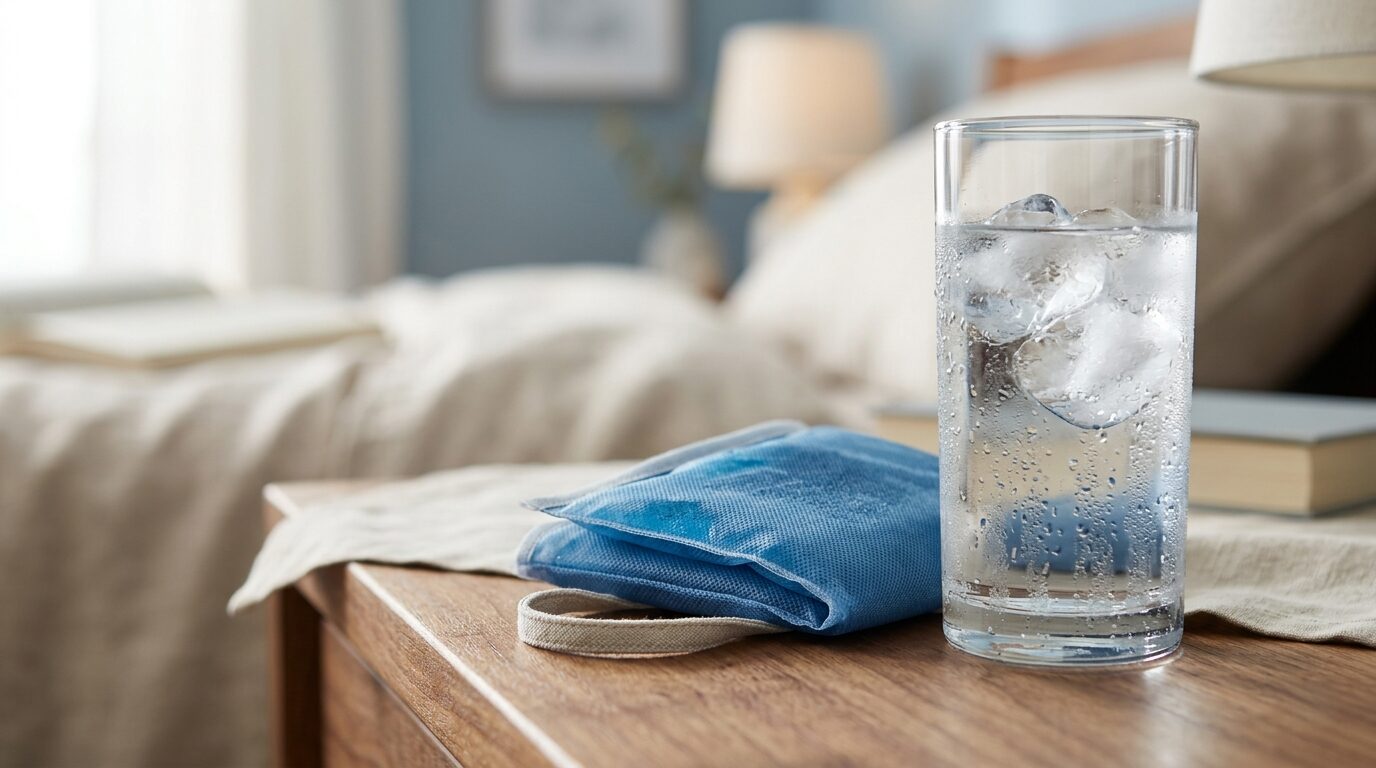 Migraine home remedies work best when you use them early and together. None of these is a magic fix in isolation. Combined, they address the attack from multiple angles, which is why the combination beats any single trick.
- Get into a dark, quiet room immediately. Light and sound sensitivity are hallmarks of migraine; both actively feed the pain signal. Removing them early gives your nervous system a chance to settle.
- Apply a cold compress. A cold pack, ice wrapped in a cloth, or even a bag of frozen vegetables applied to your forehead or the back of the neck can cause vasoconstriction (narrowing of blood vessels) and meaningfully reduce the throbbing within fifteen to twenty minutes. This is one of the most consistently effective migraine home remedies that requires nothing you don’t already have.
- Drink water slowly. Dehydration is both a migraine trigger and a pain amplifier. Sip a glass steadily. Chugging large amounts can trigger nausea.
- Use caffeine strategically. Small amounts of caffeine enhance the effectiveness of pain relievers and can help in the early stages of an attack. Too much, or a sudden drop from your usual intake, can backfire and worsen the headache.
- Lie still, even if you can’t sleep. Closing your eyes and reducing movement cuts down the sensory input feeding the attack. Rest isn’t passive. It’s an active recovery.
- Try gentle pressure points. Light pressure at the temples, the base of the skull, or the webbing between the thumb and index finger can ease tension that’s compounding the pain.
These migraine home remedies form a simple protocol: dark room, cold compress, water, stillness, targeted pressure. Build it into a routine, and you’ll get real migraine relief at home for mild to moderate attacks far more consistently than relying on any single remedy.
How to Stop a Migraine Before It Gets Worse
Timing is the single most important variable in how to stop a migraine, and it’s the one most people get wrong. Treat it the moment symptoms appear, before the pain fully peaks, and your odds of a fast recovery increase dramatically. The earlier the intervention, the better the outcome.
Over-the-counter options handle a significant portion of mild to moderate attacks when used correctly. Ibuprofen and aspirin target inflammation directly. Acetaminophen is gentler on the stomach but doesn’t address inflammation the same way. The critical detail most people miss: take a full dose at the first sign of an attack, not once it’s fully developed. Waiting to see how bad it gets is one of the most common mistakes. It allows the pain cycle to entrench before the medication can interrupt it.
Knowing how to stop a migraine before it starts is the next level, and it’s mostly about reading your own prodrome. Understanding how to get rid of migraine pain at this early stage, before it fully develops, is where the biggest gains are. If you consistently notice fatigue, neck stiffness, or mood changes the day before a headache, those are your warning signals. Some people can effectively abort an attack with early intervention during the prodrome phase, before the headache even begins.
Prescription options become relevant when OTC medication isn’t doing the job. Triptans (sumatriptan, rizatriptan, and others) are the most widely used class. They work by narrowing blood vessels and blocking the specific pain signals involved in migraine. CGRP receptor antagonists are a newer option, particularly useful for people who can’t tolerate triptans or haven’t responded well to them. A neurologist can determine which fits your situation.
When to See a Neurologist for Migraines
Migraine relief at home and over-the-counter options are genuinely sufficient for occasional attacks. But some situations require more than home management.
Seek emergency care immediately if you experience a sudden, severe headache unlike anything you’ve felt before (sometimes called a thunderclap headache), a headache paired with fever and stiff neck, or any new neurological symptom: weakness, confusion, trouble speaking, vision loss. None of that is a typical migraine, and none of it should be waited out.
See a specialist, even without those red flags, if:
- Migraines occur four or more days per month
- The frequency or severity is increasing
- OTC medications have stopped working as well as they used to
- Migraines are interfering with work, family, or daily function
At this stage, knowing how to stop a migraine with home care or OTC meds is no longer the right frame. The goal shifts to prevention. These patterns usually indicate a need for chronic migraine treatment: a different approach than just managing each attack as it comes. That typically means preventive medication (beta-blockers, certain antidepressants, anticonvulsants, or CGRP monoclonal antibodies), lifestyle modifications, and sometimes procedures. Nerve blocks and Botox injections have strong evidence behind them specifically for migraine prevention.
At Lone Star Neurology, we specialize in diagnosing and treating migraines and other headache disorders, with same-week appointments and individualized long-term plans, not generic advice. If how to get rid of a migraine has been your most-searched phrase for longer than it should be, that’s a sign the attack-by-attack approach isn’t working. Lasting relief is possible. It just requires the right plan.
📞 Call us at 214-619-1910 or schedule online at lonestarneurology.net to get started.

 (146 votes, average: 4.70 out of 5)
 Loading...







I've given up... the stress her office staff has put me through is just not worth it. You can do so much better, please clean house, either change out your office staff, or find a way for them to be more efficient please. You have to do something. This is not how you want to run your practice. It leaves a very bad impression on your business.
Please, leave your review
Write a comment: