

Many people experience specific medical problems accompanied by various symptoms. Researching diagnostic procedures helps identify the underlying condition and reduces anxiety. Today, EEG and EMG examinations are becoming increasingly common. However, many people don’t know what to expect or how to properly prepare. Understanding how to prepare for an EEG helps ensure the most accurate results. The EEG procedure evaluates the electrical activity of the brain. EMG and nerve conduction studies analyze how muscles and nerves function.
Many patients feel anxious about the unknown. Proper preparation means actively participating in your diagnosis. Following medical recommendations helps obtain reliable data. At reputable clinics, patients can receive quality care to improve their health. Preparing for EEG and EMG is the first step toward successful diagnosis. Knowing how to prepare for these EEG and EMG tests reduces patient stress. The procedures become safe, predictable, and as effective as possible.
How to Prepare for an EEG or EMG Appointment
Reputable neurology clinics help conduct accurate examinations. Proper preparation begins well before you enter the office. Following the EEG test instructions carefully is essential. This helps avoid repeat testing and inaccurate results. It’s important to understand that EEG and EMG preparations share some similarities and differences. EEG requires a clean scalp, free of cosmetics or hair products. EMG and nerve conduction study preparation focuses more on the skin and muscle condition. Here are clear guidelines you should know:
- For an EEG, hair should be clean, dry, and free of hairspray, gels, and oils.
- Continue taking your regular medications unless your doctor specifically tells you to stop.
- For EMG, ensure your skin is clean without creams or lotions.
- Wear comfortable clothing that allows easy access to your arms and legs.
- Better signal quality leads to more accurate interpretation.
- Clean signals allow proper assessment of nerve and muscle function.
Before an EEG, you’ll typically be asked to get a good night’s sleep. In some cases, your doctor may ask you to limit your sleep instead. Sleep deprivation can reveal certain brain activity patterns that might not appear otherwise. This is particularly useful when doctors suspect seizure disorders that occur primarily during specific sleep stages.
What to Avoid Before an EEG or EMG Test
Certain habits and small details can significantly affect examination results. That’s why knowing what to avoid before EMG and EEG is crucial for test accuracy. Many patients underestimate the impact of caffeine, cosmetics, or changes in sleep patterns. These factors can distort results and complicate diagnosis. Hair products and skin lotions create a barrier that impairs electrode contact. The electrodes need direct skin contact to pick up the subtle electrical signals your brain, nerves, and muscles produce. Even a thin layer of moisturizer can act as an insulator, weakening the signal. You should also avoid overexertion or staying awake without your doctor’s specific instructions. Here’s what you need to know:
- Before EMG, avoid oils and lotions, as they can interfere with electrode contact.
- Before an EEG, avoid caffeine, as it affects brain activity patterns.
- Ignoring preparation guidelines reduces the quality of the recording.
- Drinking alcohol the night before EMG can affect nerve conduction.
- Remove metal jewelry before nerve conduction studies, as it can interfere with testing.
- Signal quality directly affects how doctors explain your EEG results.
- Unclear data can complicate EMG diagnosis.
Caffeine in energy drinks and strong tea changes nervous system activity. This can complicate EEG interpretation and create misleading results. For EMG, avoid strenuous physical activity the day before your test. Fatigued muscles exhibit altered electrical activity, which can affect test accuracy. Your muscles need to be in their normal resting state for the test to measure their electrical responses accurately.
What to Bring to Your EEG or EMG Appointment
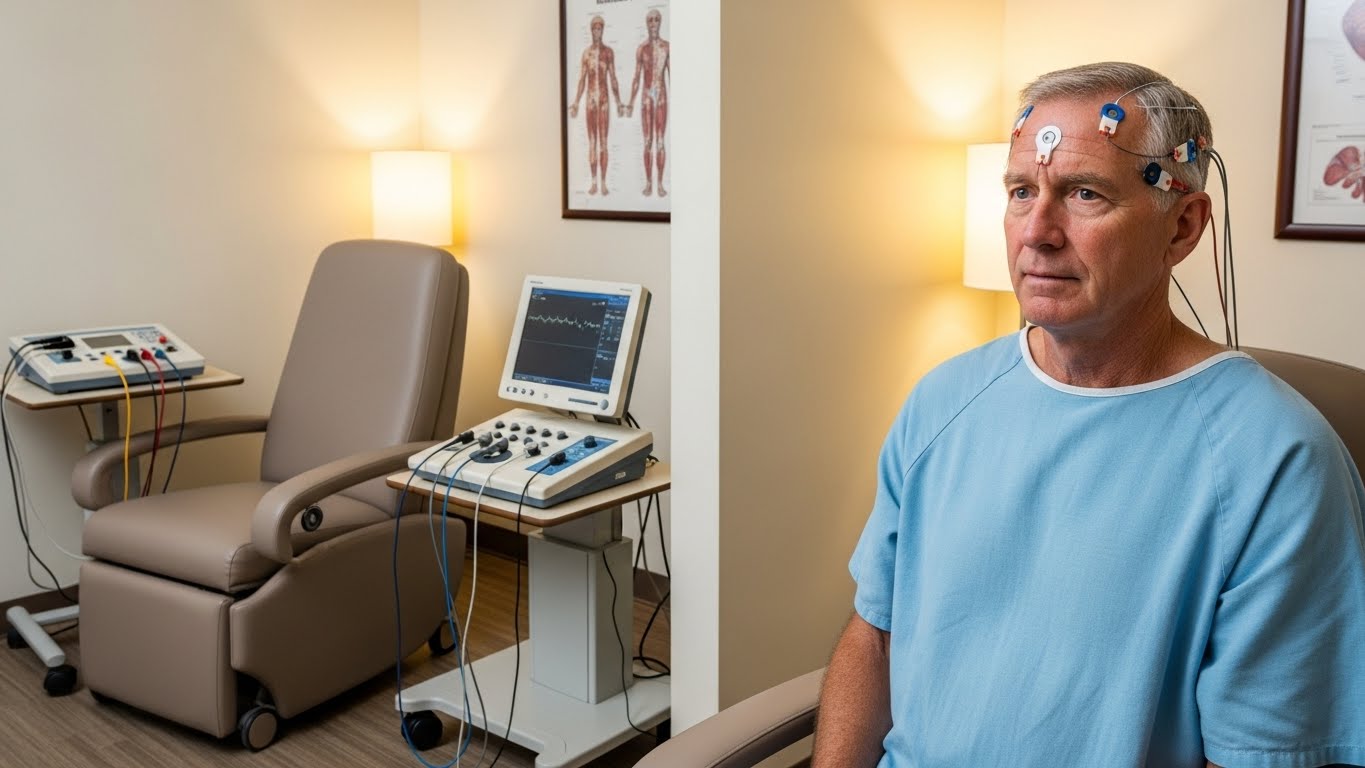
Being well-prepared saves time and ensures accurate testing. For successful EEG and EMG procedures, bring all necessary documents and medical information. Allow time to complete paperwork comfortably before your appointment. This approach reduces stress and helps you focus during the procedure. Patients who come prepared rarely need repeat examinations. EEG and EMG results explained become much more accurate with proper preparation. Complete documentation helps doctors work efficiently. Here’s what you need to bring:
- Your doctor’s referral and any specific testing instructions.
- A complete list of all medications with dosages.
- Information about your sleep patterns and recent symptoms for the EEG.
- Previous EEG or EMG results for comparison, if available.
- Details about previous injuries or surgeries affecting the tested area.
- Your medical history, especially regarding neurological conditions.
Having your complete medication list is particularly important because certain drugs can affect test results. Seizure medications, muscle relaxants, and sedatives all influence electrical activity in your nervous system. Your doctor needs to know exactly what you’re taking to interpret results correctly. If you’ve had similar tests before, bringing those results allows your doctor to track changes over time. This comparison can reveal whether your condition is improving, worsening, or staying stable.
What Happens During EEG and EMG Testing
Before these examinations, most patients feel nervous because they don’t know what to expect. In reality, EEG and EMG are safe, controlled, and highly effective diagnostic methods. When you understand the process, anxiety decreases and confidence increases. That’s why doctors always emphasize patient comfort during procedures. EEG causes no physical sensations beyond possibly feeling cool gel on your scalp. EMG may cause brief discomfort during electrode insertion. Neither test damages tissue nor causes long-term side effects. Here’s how EEG and EMG proceed step by step:
- During an EEG test instructions, small electrodes are placed on your head. They measure brain electrical activity without transmitting any current.
- You’ll sit or lie down with your eyes closed. You may be asked to breathe deeply or look at flashing lights.
- During EMG, thin needle electrodes are inserted into muscles. Surface electrodes may also be placed on your skin to record muscle activity.
- Small electrical pulses stimulate nerves to measure the speed of signal transmission.
- Remaining calm and relaxed ensures the best recording quality.
- Avoid applying creams or lotions before EMG to ensure accurate electrode contact.
- Clear signals help doctors properly assess nerve and muscle conditions.
EEG typically takes 20 to 40 minutes, which is quite manageable. EMG can last from 30 minutes to an hour, depending on how many areas need testing. These tests don’t deliver electrical shocks and are completely safe. EEG doesn’t apply any electricity at all, and EMG uses minimal, safe impulses. When you understand what to expect, the studies feel easy. The examination proceeds calmly and comfortably.
EEG Results Explained: What Your Brain Activity Can Show
Many patients expect simple, straightforward answers from test results. However, explaining EEG results is a complex process requiring medical expertise and clinical context. The recording itself is a diagnostic tool, not a definitive diagnosis. EEG reflects the electrical signals the brain transmits between neurons. These signals have varying frequencies, patterns, and symmetry. A normal EEG doesn’t always mean there are no problems. Temporary changes can occur due to fatigue, lack of sleep, or medications. EEG helps detect seizure activity and sleep disorders. The test reveals the effects of head injuries, infections, or other brain conditions. It’s also used to assess overall brain function. Doctors look for specific patterns that indicate different conditions. For example, spike-and-wave patterns often suggest epilepsy, while diffuse slowing might indicate encephalopathy or metabolic problems. The location and timing of abnormal activity provide clues about which brain regions are affected. EEG explained results are just one part of the complete clinical picture. Here’s what an EEG can show:
- Normal wave patterns indicate healthy brain function.
- Following preparation instructions ensures clear, accurate results.
- Proper preparation minimizes interference and background noise.
- EEG is part of a comprehensive neurological examination.
- Combined with other tests, it helps assess both the central and peripheral nervous systems.
EMG Results Meaning: Understanding Nerve and Muscle Findings
EMG results meaning always evaluated alongside your symptoms and medical history. After testing, many patients try to interpret the technical report themselves. A neurologist’s interpretation is essential for understanding nerve conduction studies. Proper analysis helps determine exactly where problems occur and their significance. EMG results reveal nerve damage, compressed nerve roots, muscle diseases, and neuromuscular transmission disorders. The meaning always depends on the clinical context.
Doctors use EMG to inform treatment decisions. The test can distinguish between problems originating in the muscle itself versus issues with the nerves that control those muscles. This distinction is critical for choosing the right treatment approach. For instance, carpal tunnel syndrome shows specific patterns of nerve slowing at the wrist, while muscular dystrophy produces different characteristic changes in muscle electrical activity. Patients should wait for their doctor’s interpretation rather than drawing their own conclusions. Here’s what EMG results typically evaluate:
- The test measures nerve signal speed and strength.
- Preparation quality directly affects measurement accuracy.
- Clean skin without lotions ensures precise readings.
- Creams and cosmetics can distort the data.
- EMG combined with nerve conduction studies provides a complete picture.
- Following instructions is essential for a comprehensive neurological assessment.
- Proper preparation affects the quality of your entire examination.

 (92 votes, average: 4.52 out of 5)
 Loading...







I've given up... the stress her office staff has put me through is just not worth it. You can do so much better, please clean house, either change out your office staff, or find a way for them to be more efficient please. You have to do something. This is not how you want to run your practice. It leaves a very bad impression on your business.
Please, leave your review
Write a comment: